
A Restaurant Move Example That Protects Trading
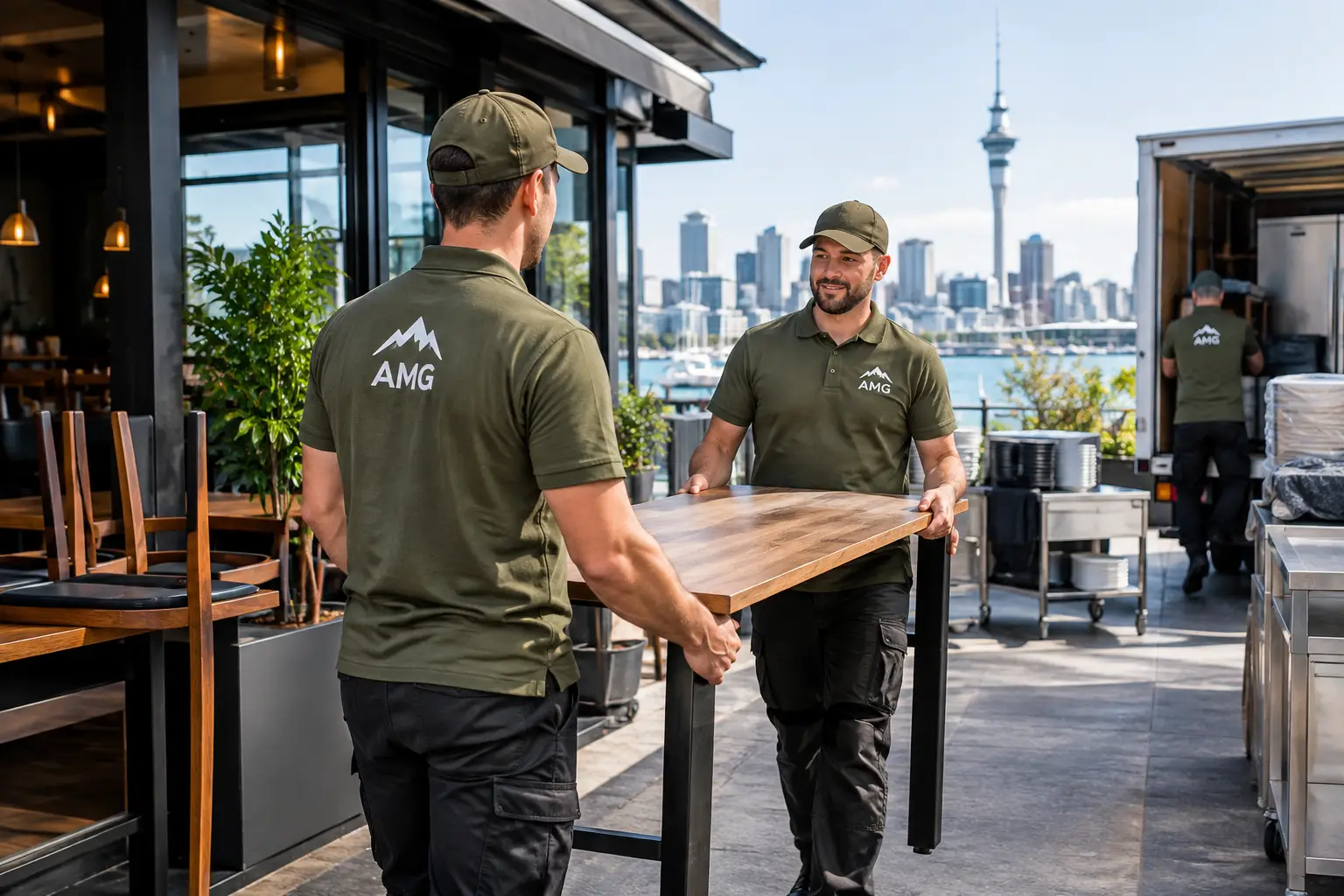
A restaurant move can lose money long before the truck arrives. One damaged combi oven, a fridge left disconnected too long, or a dining room packed without a labelling system can push reopening back by days. This restaurant move example shows what a properly planned relocation looks like when the goal is to protect expensive equipment, keep staff productive and get the doors open again without avoidable delays.
The scenario is a busy 90-seat Auckland restaurant moving from a leased site to a larger premises across town. The business has a commercial kitchen, walk-in refrigeration components, stainless benches, a bar, furniture, dry stock, POS equipment and a small office. It wants to close after Saturday service and begin final setup at the new site on Monday morning.
That is a tight turnaround. It is achievable, but not with a vague booking, a dirty general-purpose truck and a crew that treats commercial equipment like household furniture.
Restaurant move example: the job starts before moving day
The move manager walks through both sites with the restaurant owner or operations manager. This is not a sales formality. It establishes what is actually being moved, how it will come out, where it will go, and what could stop the job on the day.
At the old premises, the team checks loading access, vehicle height restrictions, stairs, lift bookings, rear-lane access and the distance from kitchen to truck. At the new site, they check the same details, plus where each item needs to land. A fridge placed in the wrong corner may need to be moved again after other equipment is installed. That costs time, creates congestion and increases handling risk.
The walkthrough identifies the items needing specialist planning: a heavy commercial fridge, glass-fronted display cabinet, stainless rangehood sections, a three-door freezer, a safe holding cash and records, and marble-topped tables. It also separates items that should not go on the furniture truck at all, such as gas bottles, hazardous chemicals, loose grease, or food requiring temperature control.
A professional mover will be clear about those boundaries. The restaurant remains responsible for having gas, electrical and plumbing connections disconnected and reconnected by qualified tradespeople. Movers transport and position equipment. They do not improvise around live services, fixed ducting or unsafe loads.
The inventory is organised by reopening priority
A restaurant does not need every carton unpacked first. It needs the right things available in the right order.
In this example, the owner creates four simple categories: kitchen equipment, front-of-house furniture, bar and administration. Each carton and loose item is labelled with its destination room and priority. High-priority items include cookware, dry goods needed for the first service, POS hardware, cleaning supplies, menus, bar tools and staff uniforms.
This avoids the familiar problem of ten unmarked cartons sitting in the new kitchen while staff search for a single essential item. Good labelling is not paperwork for its own sake. It saves paid staff hours and helps the relocation crew place loads correctly the first time.
Preparing kitchen equipment properly
Commercial kitchen equipment is valuable, awkward and often heavier than it looks. Stainless benches may appear straightforward, but their sharp edges, adjustable feet and fitted shelves need protection. Refrigeration units are vulnerable to dents, doors opening in transit and damage to compressors if handled carelessly.
Before the move, the restaurant schedules a technician to disconnect appliances and confirms manufacturer guidance for refrigeration equipment. Refrigerators and freezers are emptied, cleaned, dried and secured. Shelves, trays and removable fittings are packed separately or fixed in place so they cannot shift during transport. Ice machines and coffee equipment need particular attention because residual water can leak into a truck or damage other goods.
The heavy items are assessed for weight, dimensions and the route to the vehicle. A commercial fridge may require appliance skates, a suitable trolley, load-rated ramps and enough trained handlers to control it safely. The cheapest quote is rarely cheap if the crew arrives without the right equipment and spends an hour trying to solve a predictable access problem.
For the restaurant owner, the important question is not simply, “Can you move it?” Ask how it will be protected, loaded, restrained and unloaded. Purpose-built furniture trucks, clean moving blankets, straps, trolleys and trained staff are part of the job, not optional extras.
Loading in the right sequence saves time later
The order of loading should reflect the order of unloading. In this restaurant move example, the kitchen is set up first because it drives the reopening schedule. Large kitchen equipment is loaded securely with the heaviest units balanced over the truck’s axle area and restrained independently. Benches and shelving follow, protected so metal-on-metal contact does not leave dents or scratches.
Dining tables, chairs and booth components are wrapped and loaded as a separate zone. Chairs are bundled or stacked safely where suitable, while fragile timber finishes and marble tops receive individual protection. Glassware, crockery and bar stock are packed into strong cartons with no empty space for contents to rattle around.
The office and POS equipment travel in clearly marked cartons, kept dry and away from heavy items. Paperwork, keys, alarm codes and devices containing customer or staff information should stay with the owner or nominated manager rather than disappearing into a general load.
For a move like this, labour-only help can suit a business that already has compliant vehicles, equipment and a capable site manager. Most restaurants, however, are better served by a crew supplying the truck and handling equipment as one accountable service. If something goes wrong, there should be no argument between a truck hire company, casual labour and a booking platform about whose responsibility it was.
The new site needs a controlled unload
A fast unload is not the same as a rushed unload. At the new premises, one restaurant representative meets the crew and confirms the placement plan before the first item comes off the truck. The kitchen route is kept clear, floor protection is laid where needed, and staff are directed away from active moving paths.
Heavy equipment is positioned first, but not connected. The restaurant’s tradespeople then complete electrical, gas, plumbing and ventilation work. Refrigeration units are left standing for the period recommended by the manufacturer before being powered on, particularly if they have been tilted during handling.
Next come benches, storage racks and smaller kitchen items. Front-of-house furniture is placed according to the floor plan, not wherever there is temporary space. Bar equipment and POS hardware are delivered to their stations, with cartons marked for immediate unpacking kept accessible.
The owner checks items as rooms are completed rather than waiting until the end of the day. A quick condition check, count of major equipment and confirmation that nothing remains on the truck makes issues easier to identify while the crew and vehicle are still on site.
Where restaurant relocations commonly go wrong
The most expensive errors usually begin with assumptions. A restaurant assumes the rear lane will be available, but another tenant has blocked it. The owner assumes a fridge will fit through a doorway, but the handles were not included in the measurement. The mover assumes everything is disconnected, but a dishwasher is still plumbed in when the crew arrives.
Timing also matters. Moving immediately after Saturday service may be practical, but staff need enough time to clean equipment, remove stock and prepare access. If food is being retained, arrange compliant chilled transport or move it separately in a way that protects food safety. Do not load perishables into a furniture truck and hope for the best.
Insurance and responsibility should be discussed before booking, not during a dispute. Ask the mover what protections apply, what condition items need to be in for transport, and whether any specialty pieces require separate arrangements. Straight answers are a sign of a serious operator.
Choosing the right moving crew for the job
A restaurant relocation is a commercial move, not a house move with more chairs. The crew should understand how to handle heavy furniture, commercial appliances and fragile finishes while working around tight timeframes and building access rules.
Look for a direct moving company with trained in-house staff, suitable transport licencing, clean purpose-built trucks and equipment that matches the job. Be wary of lead-generation sites that take a booking then pass it to an unknown subcontractor. When your fit-out, trading schedule and reputation are on the line, you need to know who is arriving at the door.
Auckland Moving Guys approaches commercial relocations with that level of preparation. The aim is not to make dramatic promises. It is to assess the job properly, bring the right people and equipment, and complete each stage without creating a bigger problem for the business owner.
The best restaurant move is rarely remembered for the truck or the packing blankets. It is remembered because the kitchen is where it should be, the dining room is ready to reset, nothing valuable has been mishandled, and the team can focus on serving customers again.



0 Comments