
In House Movers vs Subcontractors: Who Handles Your Move?
A moving quote can look perfectly reasonable until you ask one simple question: who will actually turn up at your door? In house movers vs subcontractors is not a technical detail buried in the fine print. It affects who handles your furniture, who controls the truck and equipment, and who takes responsibility if something goes wrong.
Some moving businesses employ and train their own crews. Others accept the booking, then pass all or part of the work to a subcontractor. Neither model automatically tells you whether a move will be good or bad. But the level of control, consistency and accountability can be very different, especially when you are moving a full household, a busy office or a heavy item that cannot be replaced.
What in-house movers mean in practice
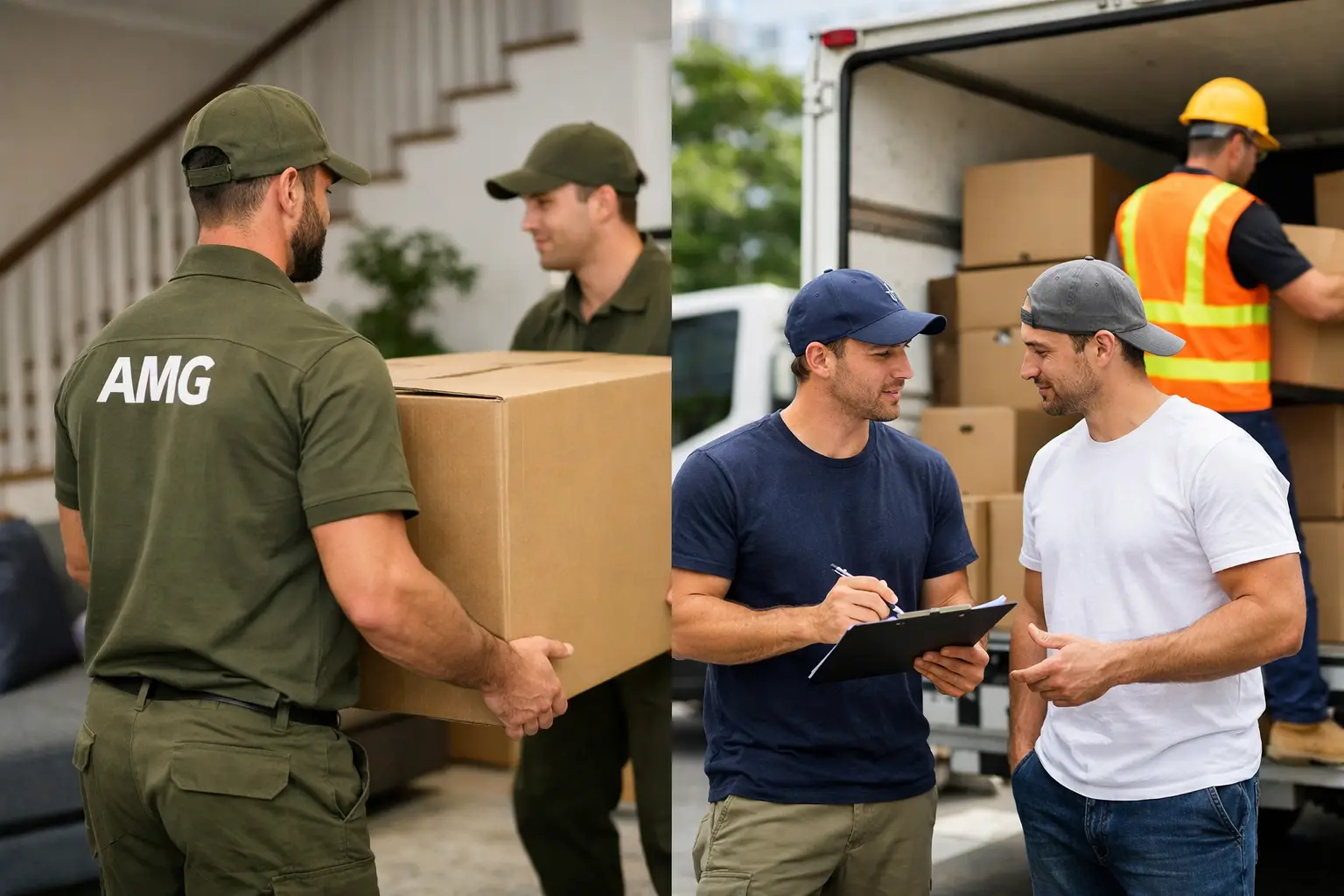
An in-house moving crew works directly for the moving company you booked. The company generally recruits the movers, trains them, sets the operating procedures, maintains the vehicles and supplies the tools used on the job. That gives the business direct control over how a move is planned and carried out.
For a customer, the practical benefit is clear. The people loading your lounge suite, wrapping your dining table and carrying boxes down the stairs should be working to the same standards as the company that took your call. If access is tight, the lift is booked for a limited time, or a large fridge needs careful handling, there is one operating team responsible for sorting it out.
This matters because moving is not just lifting. Good movers need to assess weight, balance, access, parking, weather, loading order and the protection needed for each item. They need to know when a two-person carry is sensible, when extra labour is required, and when an item should be dismantled rather than forced through a doorway. Those decisions come from training and repeat experience, not simply having a truck available.
In-house crews also tend to be familiar with their own equipment. They know how the ramps work, where the furniture pads are stored, whether the straps are suitable, and how the truck should be loaded to prevent movement in transit. A clean, purpose-built furniture truck is not a cosmetic extra. It helps protect belongings and allows the crew to work efficiently, which is particularly important where moving time is charged by the hour.
In house movers vs subcontractors: the accountability gap
A subcontractor is an independent operator engaged to complete work for another business. In moving, that might mean a company sells the job under its name but sends an external crew, hires another truck at short notice, or uses a separate team for part of a larger relocation.
There are capable subcontractors in the industry. An experienced specialist may be a sensible choice for a particular job, such as crane access, a difficult piano move or transport to a remote location. The issue is not the label. The issue is whether the company you are dealing with remains actively responsible for the people, equipment and outcome.
Problems arise when a booking platform or lead-generation business presents itself as a moving company but does not perform moving work itself. Your booking may be passed on without you knowing who has accepted it, what truck they will bring, whether the crew has been checked, or what standards they follow. If there is damage, a late arrival or a disagreement over extra charges, customers can find themselves caught between the business that took payment and the operator who did the work.
With a direct, properly managed moving company, that chain should be much shorter. You should know who is handling the move and who to contact if plans change. There should be no confusion about whether the crew is authorised to make decisions, whether they have the right gear, or who owns the responsibility for a problem.
Where subcontracting can make sense
There are times when subcontracting is practical. A mover may need additional labour during a peak period, specialist lifting equipment for an unusual item, or an experienced carrier for a route outside its normal operating area. A large commercial relocation may also involve several crews and vehicles, including specialist contractors.
The difference is in how it is managed. A professional mover does not simply hand over a job and hope for the best. They assess the subcontractor, confirm licences and capability, set expectations, provide clear job details and remain accountable to the customer. The customer should not have to chase multiple parties to find out where their furniture is or why the truck has not arrived.
If a company uses subcontractors, ask directly how it works. Will the booked company supervise the move? Is the crew known to them? Is the vehicle suitable for furniture transport? Who manages damage claims or concerns? Straight answers are a good sign. Evasive language about being a marketplace, a booking service or a network should make you pause.
Training is where the difference often shows
Moving crews are often judged by how quickly they carry a box. The real test is how they work when the job is difficult. A trained team protects polished timber before it reaches the truck, keeps fragile items upright, uses correct lifting methods and avoids packing heavy objects on top of soft or delicate furniture.
They also work as a crew. One mover may guide a bulky sofa through a narrow hall while another manages the corners and communicates the next step. On a commercial move, the team needs to label, stage and load items in a sequence that lets the new premises be set up without unnecessary handling. This reduces risk and avoids wasting time at the destination.
An in-house team can be trained in one system, then monitored and improved over time. If a recurring issue is identified, the company can change its process across the crew. That is harder when each job is allocated to a different external operator with different habits, vehicles and priorities.
Pricing is only useful when the service is clear
A low quote may look attractive, particularly when move costs are already adding up. But a price is not useful if it leaves basic questions unanswered. Does it include trained movers, a furniture truck, protective blankets, straps, travel time and the labour needed for your access conditions? Or is it a lead price designed to secure the booking before the practical details appear on moving day?
Customers should be wary of quotes that are dramatically cheaper than established operators without a clear explanation. Cutting the hourly rate can be less of a bargain if an inexperienced crew takes longer, arrives without enough protection, or needs to make extra trips because the truck is unsuitable.
Value for money comes from a crew that works safely and efficiently. A properly planned move may cost more than a bare-bones booking on paper, but it can prevent damaged furniture, avoid delays and reduce the stress of trying to solve problems while your home is half packed.
Questions worth asking before you book
Before choosing a mover, ask whether the people attending are employed in-house or subcontracted. Then go further. Ask whether the company owns or controls the truck, what training the crew receives, how specialty items are handled and who remains responsible from pickup through to delivery.
For a house move, be upfront about stairs, long carries, difficult driveways, lifts, parking restrictions, oversized furniture and anything fragile or unusually heavy. For an office move, discuss access windows, building rules, IT equipment, filing systems and the order in which workstations need to be reassembled. Honest information allows a professional mover to send the right crew and vehicle from the start.
Auckland Moving Guys operates with trained in-house movers because direct control is how standards are maintained on real moving jobs. Whether the task is a local furniture move, an office relocation or an intercity run, the crew, truck and plan need to match the work.
The best choice is not simply the company with the cheapest booking form or the loudest promise. Choose the mover that can clearly explain who will be at your property, what they will bring, and how they will protect the things you have worked hard to own.


0 Comments