
How to Move Office Furniture Without Damage
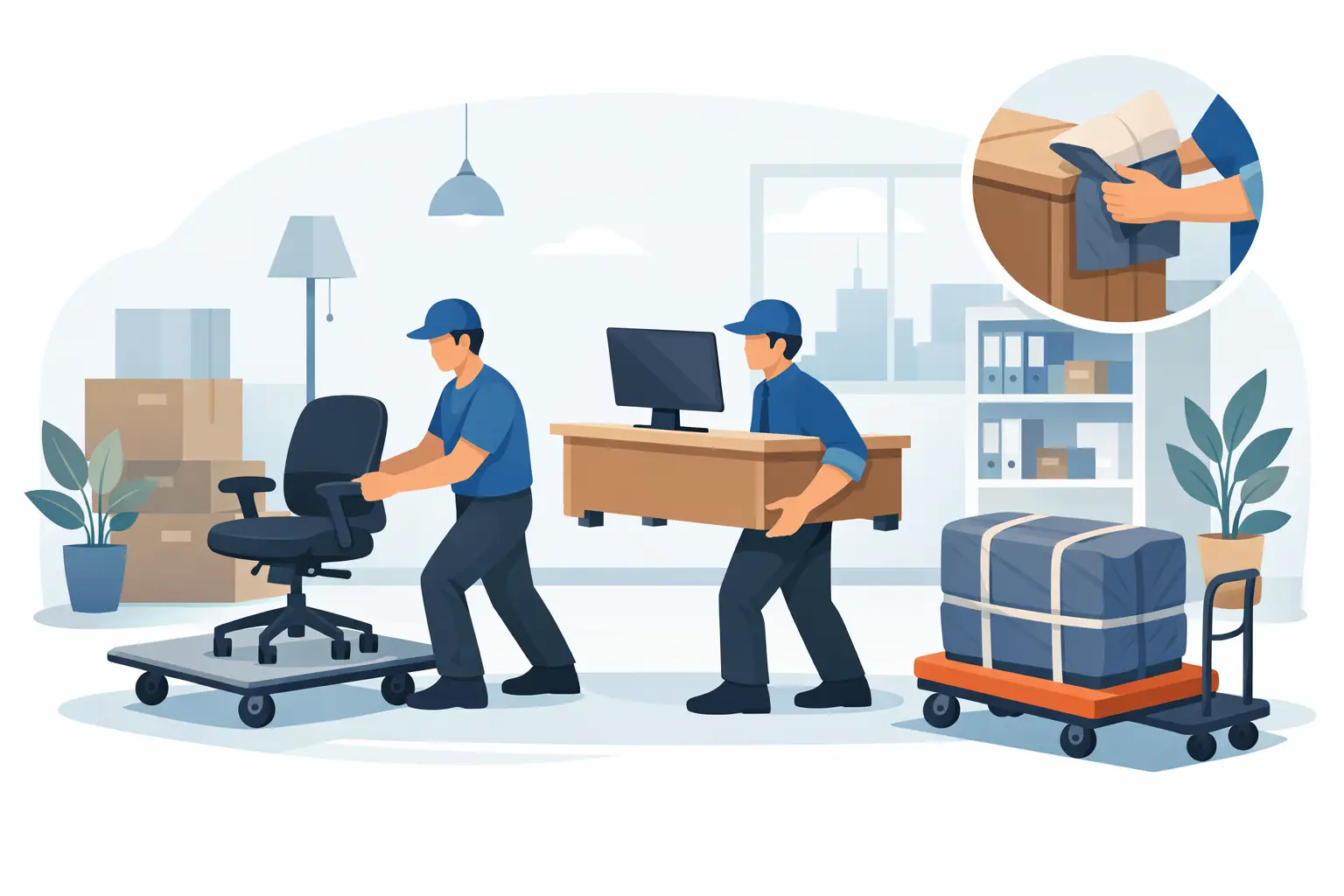
An office move can go off the rails before the truck even arrives. A desk that will not fit through the doorway, filing cabinets packed full, loose monitors stacked on chairs, staff trying to lift boardroom tables without the right gear – this is how damage, delays and injuries happen. If you are working out how to move office furniture, the real job is not just getting items from one address to another. It is protecting your fit-out, keeping your team safe and avoiding wasted time that drives up moving costs.
How to move office furniture starts with a proper plan
The biggest mistake in office relocations is treating them like a larger house move. Offices have different pressure points. You are dealing with workstations, IT equipment, reception furniture, storage systems, confidential files and a tighter timeline because every extra hour can affect business operations.
Start by walking through the current site and the destination. Measure large furniture, doorways, lifts, corridors and any tight corners. Identify the pieces that need dismantling and the items that must stay upright in transit, such as some cabinets, printers or specialised equipment. If access is limited, that needs to be accounted for early, not discovered on moving day.
It also helps to decide what is actually worth moving. Office relocations are a good time to get rid of broken chairs, outdated cabinets and surplus furniture that has been sitting in the storeroom for years. Moving rubbish costs money. So does moving furniture that will not be used in the new layout.
Build your move around downtime, not convenience
Many businesses aim for an evening or weekend move, and for good reason. The less disruption to staff and customers, the better. But a short move window only works when the preparation is tight. If desks are still full, cables are still tangled and nobody knows where the credenza is going, the schedule blows out fast.
Create a room-by-room and item-by-item plan. Label each piece by area, team or workstation number. That way the truck is not just unloaded into a pile at the new site. Furniture can be placed where it belongs from the start, which saves labour and gets your team operational sooner.
Protecting office furniture is mostly about handling
A lot of office furniture damage has nothing to do with distance. It happens during lifting, dragging, loading and unloading. Desks get twisted when they are lifted unevenly. Cabinets buckle when moved while full. Veneer gets chipped against door frames. Glass tops crack because someone assumed a blanket was enough.
The right method depends on the furniture. Modular desks and workstations often need partial dismantling so they can be moved safely and reassembled without stressing joints or fixings. Filing cabinets should usually be emptied before moving, both to reduce weight and to stop internal damage. Boardroom tables may need legs removed. Reception counters often have awkward shapes that require more than brute force.
Blankets, straps, trolleys, skates and proper load restraint matter. So does using a clean, fit-for-purpose furniture truck rather than whatever vehicle happens to be available. Office furniture is not built to bounce around unsecured in the back of a van.
Heavy items need a separate plan
Some offices have more than desks and chairs. Safes, large photocopiers, stone meeting tables, compactus units and heavy display pieces are a different category of move. These items can damage floors, walls, lifts and the items around them if they are handled poorly.
This is where experience really counts. Heavy moving is about weight distribution, access planning, protective materials and the right equipment. It is also about knowing when a job needs extra movers, stair equipment or a staged approach. Trying to save money by underestimating heavy items usually ends up costing more.
How to move office furniture without slowing down the whole business
Speed matters in commercial moving, but rushed work is expensive when things go wrong. The better approach is controlled efficiency. That means doing the thinking before moving day so the crew can execute without stop-start delays.
Staff should clear personal items, back up important data and disconnect small equipment ahead of time if that has been allocated internally. Shared areas should be packed and labelled. Anything confidential should be boxed securely and assigned clear responsibility. If your business has building access rules, loading dock bookings or lift protection requirements, confirm them well before the move.
The loading order matters too. Furniture for the far end of the new office should not be buried behind everything else. A planned truck load helps the unload run faster and reduces double-handling. Every time an item is moved twice, the risk of damage goes up.
Keep IT and furniture moves coordinated
One of the most common office moving problems is disconnect between furniture moving and IT setup. Desks arrive, but power access is blocked. Monitor arms are removed, but the fixings are missing. Staff come in Monday morning and find their workstation is physically there but not usable.
Even if a separate IT provider is involved, the furniture plan should work alongside the tech plan. That includes knowing which desks need to go in first, where cable management components are packed and when key staff can begin setup. An office is not functional because the furniture is inside the building. It is functional when people can sit down and work.
Should you move office furniture yourself or hire professionals?
For a very small office, a basic internal reshuffle or a move of a few light items might be manageable in-house. But once the job involves multiple rooms, bulky desks, cabinets, stairs, lifts or time-sensitive relocation, DIY starts looking cheap only on paper.
The hidden costs are usually downtime, damaged furniture, injuries, scratched walls and a team that should be working but is instead wrestling with flat-pack tools and heavy cabinets. Add the risk of using unsuitable vehicles or untrained labour and the margin for error gets very small.
Professional office movers bring more than muscle. They bring process, equipment, truck suitability and accountability. That matters when you are moving assets your business relies on every day. A company like Auckland Moving Guys Ltd. is built for exactly this kind of work – planned, efficient moving with trained in-house crews and equipment suited to furniture transport, not general cartage.
What to look for in an office furniture mover
Not all moving businesses operate to the same standard, and office clients usually find that out the hard way. Some operators are careful and properly equipped. Others are just booking platforms or loosely arranged subcontractors with little control over who turns up.
If you are comparing movers, ask direct questions. Who is actually doing the move? Are the movers trained employees or third-party contractors? What truck is being used? Is it a proper furniture truck with clean protective gear and restraint systems? Have they handled commercial relocations before, including dismantling and reassembly?
It is also reasonable to ask how they deal with access issues, heavy items and damage prevention. A professional mover should be able to answer clearly without dancing around it. Vague promises are not a plan.
Cheap quotes often leave out the real risks
An office move is one of those jobs where the lowest price can become the highest overall cost. If the crew is slow, careless or under-equipped, you pay through extra hours, damaged assets and delayed operations. That is why experienced businesses look at value for money, not just the line-item quote.
Good movers control costs by being prepared, efficient and properly equipped. That is what keeps the move moving.
Final checks before moving day
By the day before the move, every item should have a destination, packed items should be labelled clearly and access should be confirmed at both sites. Keys, swipe cards, alarm details and loading instructions should be ready. If some furniture is staying behind, mark it clearly so nothing is taken by mistake.
It also helps to nominate one decision-maker on the day. That person can answer questions, approve placement and keep things moving. Too many voices slow the process down.
A well-run office move is not about heroics on the day. It is about discipline beforehand, proper handling during the move and enough experience to solve problems without creating new ones. Get those parts right and your office furniture arrives where it should, in the condition it should, without turning the move into a costly distraction from running your business.


0 Comments