
How to Move Spa Pools Without Costly Damage
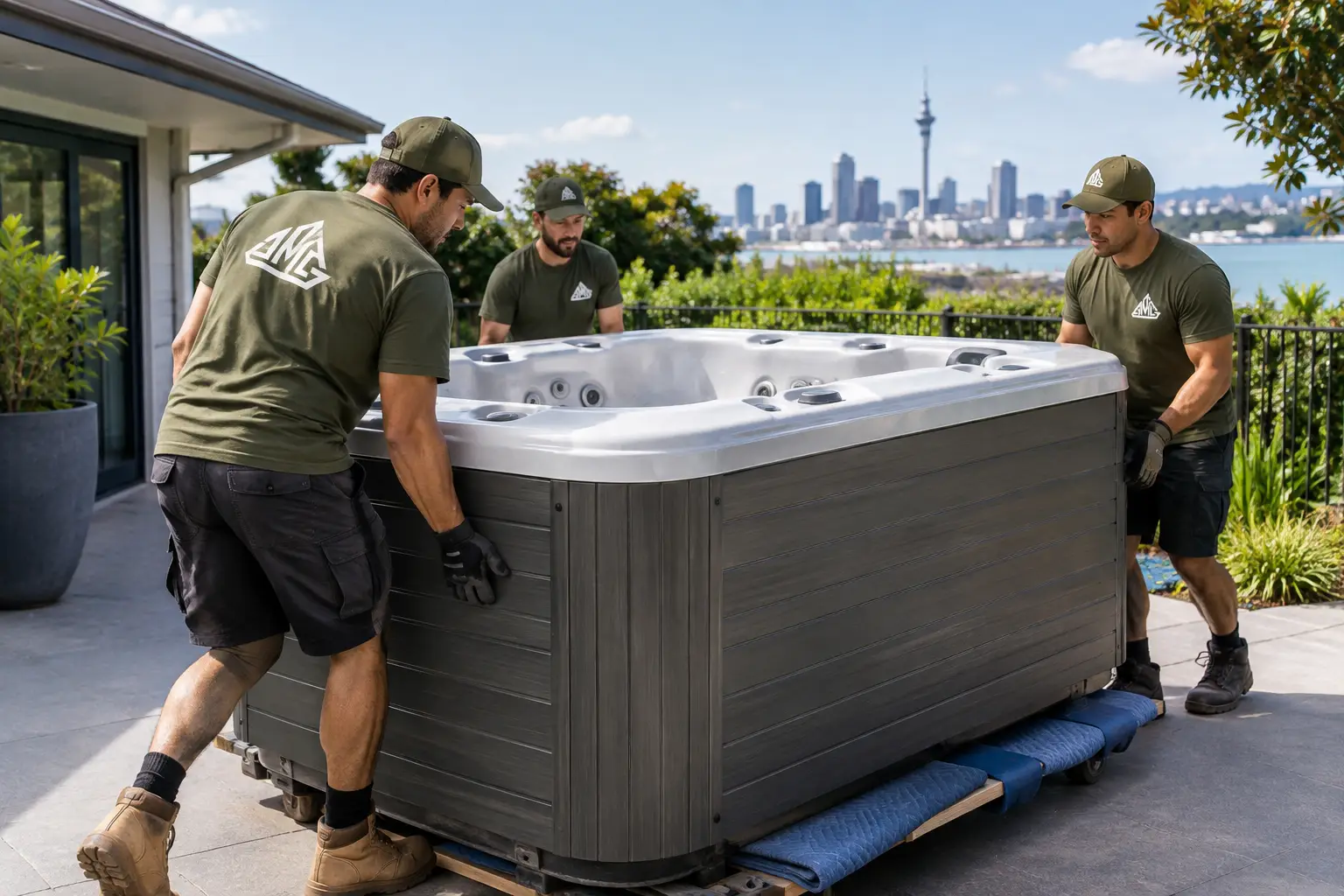
A spa pool can look like a simple square shell sitting in the backyard. In moving terms, it is anything but simple. Anyone researching how to move spa pools needs to account for a bulky, awkward load that may weigh several hundred kilograms before it is filled, has fragile plumbing underneath, and often sits behind tight gates, steps, decks or landscaped gardens.
Getting it wrong can crack the cabinet, distort the base, damage pumps and pipework, or injure the people trying to shift it. The safest and usually most cost-effective approach is to plan the move properly, use equipment suited to the load, and leave the lifting to trained movers where access or weight makes the job high-risk.
Start with the spa pool, not the truck
A successful spa move is decided before anyone starts lifting. First, identify the make, model, outside dimensions and empty weight. Do not rely on a rough guess. Smaller spas may weigh 200 to 300 kg dry, while larger family models can weigh 400 kg, 600 kg or more. Their weight is not always evenly distributed either, particularly where pumps, heaters and control equipment sit.
Measure the complete route at both properties. That means gate openings, passages beside the house, turns around corners, deck clearances, stairs, slopes, low eaves and the distance from the spa to the vehicle. A route that looks open at first glance can fail on one narrow pinch point.
Also assess the ground. Soft lawn, loose gravel, wet paving and a steep driveway change what is possible. A spa can be moved on its side in some circumstances, but not simply because it makes it easier to squeeze through a gate. The manufacturer’s handling guidance matters, as does the condition of the shell, cabinet and base.
Disconnect and drain it properly
Never begin moving a spa pool while it is connected to power or contains water. Turn off power at the appropriate isolation point and have a qualified electrician disconnect fixed wiring where required. Do not cut corners with electrical work. Water, electrical connections and rushed handling are a poor combination.
Drain the spa completely using the manufacturer’s recommended method. Remove the drain cap, connect a suitable hose and direct the water somewhere it can run off safely without flooding a neighbour’s section or undermining paving. Once drained, use a wet vacuum or towels to remove water remaining in the footwell, jets and plumbing areas. A surprising amount can be left behind.
After draining, remove loose items such as filters, headrests, steps and detachable covers. Pack these separately. Secure access panels so they cannot swing open during handling, but make sure they can be removed if the movers need to inspect the equipment area. Photograph the spa and its connections before disconnection. It provides a useful record of its condition and can help with reinstallation.
Choose the right moving method
There is no single answer to how to move spa pools because site access determines the method. For a clear, level path, a professional crew may use heavy-duty furniture dollies, lifting straps, protective padding and a purpose-built furniture truck. The spa is raised carefully, set onto suitable dollies, controlled around corners and secured inside the truck against movement.
Where the spa must travel over grass, gravel, uneven ground or a long side passage, temporary track boards, plywood sheets or specialised spa-moving equipment may be needed. These distribute load and prevent wheels from sinking or damaging the surface.
Tight access is where moving experience earns its keep. A spa may need to be stood on an approved side, rotated through a narrow passage or lifted over an obstacle by a crane or hiab. Crane work requires a separate site assessment, adequate set-up space, safe overhead clearance and a clear understanding of who is responsible for each stage. It is not an add-on to arrange on moving morning when the truck is already waiting.
Trying to manoeuvre a spa with a few mates, household trolleys and an overloaded ute often creates more cost than it saves. Spa shells and cabinets are not designed to absorb uncontrolled drops or point loads. Neither are backs, hands or feet.
Protect the shell, base and working parts
The visible acrylic shell needs protection, but the underside deserves equal attention. The base supports the spa structure and often protects plumbing, electrical components and insulation. Dragging it across concrete, gravel or timber can damage parts that are difficult to see until the spa is refilled.
Use clean moving blankets, corner protection and secure strapping. Straps should stabilise the spa, not crush cabinet panels or press hard against vulnerable plumbing locations. Avoid wrapping it in plastic for an extended period if moisture is trapped beneath it, particularly if the spa will sit in storage.
Inside the truck, the spa must be tied down to rated anchor points with suitable restraints. It should not be left relying on its own weight or wedged against household furniture. A sudden stop, sharp turn or rough road can shift a poorly secured load and cause damage to both the spa and everything around it.
A clean, fit-for-purpose furniture truck also matters. A spa should not be transported in a vehicle with an unsuitable deck height, inadequate tie rails or loose equipment rolling around the cargo area. Professional movers plan the load around its weight, access requirements and order of unloading, rather than forcing the spa into whatever space remains.
Plan the new location before unloading
The destination needs more than a space big enough for the spa. Confirm that the base is level, firm and engineered to support the filled weight. Water is heavy: even a modest spa can weigh well over a tonne once filled and occupied. A deck may require assessment before a spa is placed on it.
Ensure the new position allows access to service panels, has suitable drainage and meets electrical requirements. If the spa is being placed close to a fence, wall or planting, leave enough working room for future maintenance. It is frustrating and expensive to move a spa twice because a control box or pump cannot be reached.
Movers should place the spa carefully onto its final base, checking alignment before its full weight settles. Do not drag it into position across pavers or decking. If a small adjustment is needed, use the correct lifting and sliding method rather than brute force.
Reconnect with care and check before filling
Once positioned, refit any panels, accessories and cover hardware that were removed for transport. Have a licensed electrician complete any fixed electrical reconnection and confirm the installation is safe. This is not a job for an extension lead run across the yard.
Before filling, inspect the cabinet, shell, unions, pump area and visible pipes for signs of movement or damage. Check that all drain fittings are closed. Fill the spa according to the manufacturer’s instructions, generally ensuring the plumbing is properly primed before running pumps or heaters. Starting equipment without adequate water flow can damage it.
As the water level rises, check underneath and around service panels for leaks. Once it is full, test circulation, jets, heating and controls. A minor issue identified immediately is easier to resolve than one discovered after the spa has been used for a week.
When professional spa pool movers are the sensible choice
A straightforward ground-level move with wide access may appear manageable, but the risk changes quickly when there are stairs, retaining walls, narrow passages, awkward slopes or a large model. Professional specialist movers bring trained staff, suitable lifting gear, protective materials and vehicles designed to secure heavy household items in transit.
At Auckland Moving Guys Ltd., spa pools are treated as a specialist item rather than just another thing to put on a truck. That means assessing access before the move, matching the crew and equipment to the job, and being direct about when a crane, additional labour or a different plan is required. Clear advice upfront is far better value than discovering a problem halfway through a time-based move.
If your spa pool is being moved as part of a house relocation, mention it when requesting a quote. Include photographs of both access routes, dimensions, approximate dry weight and any obstacles. Good information allows the moving team to arrive prepared and keeps the day moving efficiently.
A spa pool should be ready for years of use after a move, not become an expensive repair project. Take the time to plan access, drain and disconnect it correctly, protect it properly and use people who understand the load. That preparation is what keeps a difficult move controlled from the backyard to its new home.


0 Comments