
Labour Only Movers Auckland: What to Know

Hiring labour only movers Auckland customers can rely on sounds simple until moving day starts burning time. You have the truck booked, the keys sorted, and a tight window to get out of one place and into the next. What you do not have room for is guesswork – not with heavy furniture, tight stairwells, awkward access, and possessions that cost far more to replace than to move properly the first time.
Labour-only moving can be a smart option, but only when it suits the job. If you understand where it saves money, where it creates risk, and what sort of crew you are actually putting your furniture in the hands of, you are far more likely to get value out of it.
When labour only movers Auckland jobs make sense
Labour-only moving is exactly what it sounds like. You supply the truck, container, trailer, or storage unit, and the movers supply the physical handling. That can work well if you are comfortable arranging transport yourself and simply need trained hands to load, unload, or shift heavy items safely.
This setup often suits local moves where the distance is short and the transport side is already covered. It can also be useful for internal moves, such as shifting furniture during renovations, restacking a storage unit, moving items within an office, or loading a rental truck for an intercity run. In those cases, paying for skilled labour rather than a full moving package can be the practical choice.
It is also worth considering if access is difficult. Apartments, narrow driveways, steep sections, and multi-level homes are where inexperienced helpers usually slow down or damage something. A trained team can make a big difference even when the vehicle is not theirs.
Where labour-only can cost more than it saves
Labour-only is not automatically the cheaper option. That is where plenty of people get caught.
If the truck you hire is too small, poorly set up, or unsuitable for furniture moving, the job can drag out. Multiple trips, bad packing inside the truck, or awkward loading heights all add time. The same goes for jobs involving fragile pieces, very heavy items, or a long carry from the house to the vehicle. Cheap transport with the wrong setup often turns into a false economy.
There is also the accountability issue. If one business supplies the truck and another supplies the labour, responsibility can become blurry when something goes wrong. Was the damage caused by poor loading, lack of tie-down points, bad vehicle condition, or rough driving? Customers should think about that before assuming labour-only is the low-risk option.
For larger family homes, office relocations, or specialty items like pianos, safes, marble tables or spa pools, full-service moving is often the better call. Those jobs usually need the right truck, proper moving equipment, and a coordinated crew from start to finish.
The real difference is not labour-only. It is who is doing the labour.
The labour-only model itself is neither good nor bad. The quality of the crew is what matters.
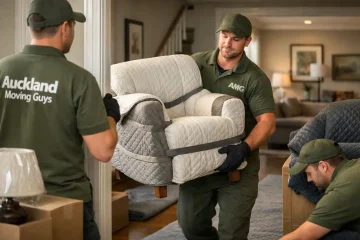
There is a big gap between trained furniture movers and people who simply turn up prepared to lift. Good movers know how to protect surfaces, carry weight through corners, stack a truck so items travel securely, and avoid wasting paid time. They understand that every extra minute on site costs the customer money.
That matters even more with labour-only work because the team must adapt to whatever vehicle or setup is on hand. If they lack experience, the job can become slow, messy, and risky very quickly. If they know what they are doing, the move feels controlled from the start.
This is why customers should be wary of booking platforms and middlemen that sell moving labour without actually doing the work. If the people arriving are subcontracted, unknown, or inconsistently trained, you are trusting your furniture to a gap in accountability. A direct moving operator with in-house staff gives you a much clearer line of responsibility.
What to check before booking labour only movers Auckland wide
Before you lock anything in, ask a few direct questions. A professional mover should be able to answer them plainly.
First, ask whether the movers are trained specifically in furniture handling, not just general labouring. There is a difference. Moving a fridge, a glass cabinet, and a solid timber dining table through a narrow hallway takes technique, not brute force.
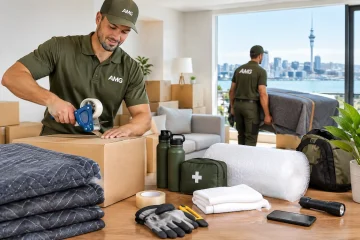
Second, ask what equipment they bring. Labour-only still requires proper moving tools. Trolleys, furniture dollies, straps, blankets, and protective materials all help prevent damage and speed up the job. A crew arriving empty-handed is a warning sign.
Third, ask how they price the work and what affects the time. Stairs, long access paths, lift bookings, oversized pieces, and poor truck selection can all change the labour required. A straight answer here is usually a sign you are dealing with people who understand real moving conditions.
Finally, ask who is accountable if there is a problem. Serious operators do not dodge that question.
The truck still matters, even for labour-only moves
One of the most common mistakes in labour-only moves is treating the vehicle as an afterthought. It is not.
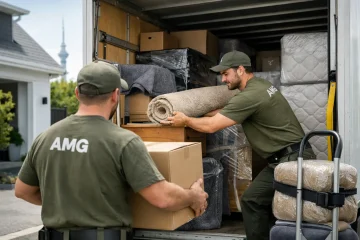
A proper furniture truck is built for moving household and commercial goods. It has the right internal space, loading height, tie rails, and room to stack furniture safely. A random rental vehicle may not. If the truck is too small, too high, poorly maintained, or awkward to load, the crew has to work around its limitations. That slows the job and increases the chance of damage.
If you are arranging your own vehicle, make sure it suits the volume and type of items being moved. Be realistic about oversized lounges, whiteware, beds, desks, and boxed household contents. Customers often underestimate cubic space and end up paying for extra labour because the load plan was wrong from the start.
If you are unsure, it is usually worth asking a professional mover what vehicle size makes sense before booking one.
Labour-only for homes, offices, and storage moves
Residential labour-only work is usually about loading or unloading a truck, shifting furniture within the property, or helping with storage. For homeowners and renters, the biggest concern is usually protecting walls, floors, and furniture while keeping the move moving.
Office labour-only jobs are a bit different. Timing matters more, downtime costs money, and desks, cabinets, and equipment often need to be moved in a set order. The crew needs to work cleanly and efficiently, not just quickly. That is why experience with commercial moves matters if you are relocating a business.
Storage moves can be deceptively difficult as well. Units are often packed tightly, access can be awkward, and customers may only want certain items moved while others stay in place. That takes planning and care, especially when furniture has been stored for a while and protection materials have shifted.
Why efficiency is the real saving
People often focus only on the hourly rate. Fair enough – moving costs add up. But the real value in labour-only moving is efficiency.
A trained crew that works methodically can finish faster, protect your belongings better, and reduce the chance of expensive mistakes. That is where the saving is. The cheapest hourly option is rarely the cheapest outcome if furniture gets scratched, items are loaded badly, or the job takes half a day longer than it should.
This is the difference between paying for labour and paying for moving expertise. They are not the same thing.
For customers who want a direct operator rather than a booking service, Auckland Moving Guys Ltd. takes this side of the work seriously because the labour is the service. The standard of the crew, the equipment they carry, and the discipline they bring to the job are what protect both your belongings and your budget.
A better way to decide
If your move is straightforward, your transport is suitable, and you simply need capable hands to do the heavy work, labour-only can be a very sensible option. If the job is larger, more complex, or involves high-value and difficult items, full-service moving may be the safer and better-value choice.
The key is not choosing the cheapest-looking format. It is matching the service to the actual job. Good movers will tell you when labour-only is enough and when it is not. That kind of honesty usually saves customers time, money, and a fair bit of grief on moving day.
When you are comparing options, think beyond the booking itself. Think about who is carrying the weight, who is responsible if something goes wrong, and whether the setup in front of you is built for furniture moving or just patched together for the day. That is usually where the right decision becomes obvious.

1 Comment
How to Choose Small Business Movers - Auckland Moving Guys Ltd · June 20, 2026 at 3:48 am
[…] last minute, and how to stage the move so that the new site can be set up faster. In some cases, labour-only help is enough if you already have transport sorted. In others, a full-service move is the better option […]