
What a Safe Moving Service Should Include
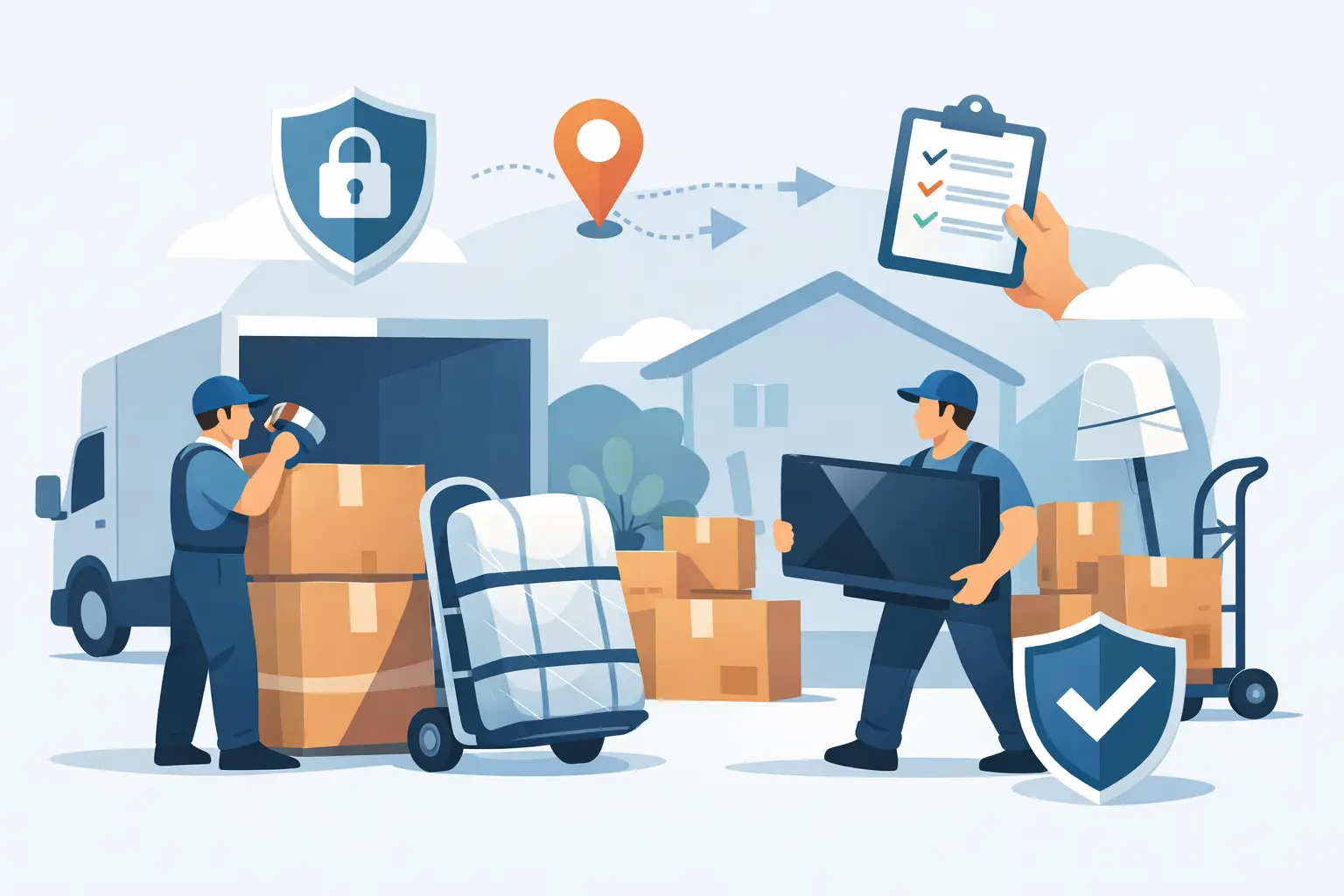
A move usually goes wrong long before the truck arrives. It starts when someone books on price alone, assumes all movers work to the same standard, and only finds out the difference when a table is gouged, a fridge is dragged, or half the day disappears into avoidable delays. If you are looking for a safe moving service, the real question is not whether a company can move boxes from A to B. It is whether they can do it without damaging your belongings, wasting your time, or leaving you arguing about responsibility afterwards.
That is where the gap in this industry sits. Plenty of operators can turn up with a truck and a couple of men. That does not make them careful, efficient, or accountable. A proper moving service is built on training, equipment, planning, and discipline on the day.
What a safe moving service actually means
A safe moving service is not just about lifting technique. Safety includes your furniture, your walls, your floors, the truck, the load restraint, and the pace of the job. It also includes whether the crew knows how to move awkward items through tight access without turning a simple move into an expensive problem.
For customers, safety also means clarity. You should know who is doing the work, what vehicle is turning up, what the likely timing looks like, and how speciality items will be handled. If those basics are vague, the move is already carrying more risk than it should.
The safest moves are not slow. That is a common misunderstanding. A well-run crew works efficiently because they know how to prepare, pack the truck correctly, protect key items, and avoid the stop-start confusion that causes damage and stretches out hourly costs.
The people matter more than the promise
The biggest factor in a safe move is the crew itself. Training is not a nice extra in this business. It is the difference between controlled handling and guesswork. Experienced movers know how to carry weight through stairs, how to protect polished timber, how to manoeuvre bulky lounges through narrow doorways, and when a job needs extra hands rather than forced effort.
This is why direct operators are usually a safer choice than lead-generation booking platforms or loosely assembled subcontractor networks. If the business taking your booking is not the business doing your move, accountability gets thin very quickly. When something is scratched, delayed, or poorly handled, customers can end up stuck between parties.
A genuine moving company puts its own standards on the line. It trains its own people, sends the right crew for the job, and remains responsible from first call to final unload. That matters far more than polished sales language.
Why experience changes the outcome
Experience shows up in small decisions that customers notice only when they are missing. Does the crew protect vulnerable items before lifting? Do they load heavier pieces to stabilise the truck properly? Do they plan access before charging ahead? Do they recognise that a marble table, safe, piano, or spa pool needs a different approach from standard household furniture?
A less experienced crew often learns on your job. That is not where you want experiments taking place.
Trucks and equipment are not a minor detail
If you want a safe moving service, look closely at the vehicle and equipment side of the operation. A clean, fit-for-purpose furniture truck is part of the service, not an afterthought. The body, tie rails, blankets, trolleys, straps, and loading setup all affect how safely your belongings travel.
A household move should not be treated like a general freight run. Furniture needs proper protection and careful load placement. Whiteware needs to stay secure and upright where required. Fragile pieces need separation and restraint. Dirty or unsuitable trucks create avoidable risk before the vehicle even leaves the driveway.
Equipment also affects efficiency. The right dollies, lifting gear, and protective materials reduce handling mistakes and cut down the time spent wrestling with bulky items. That saves more than effort. It saves hourly cost and reduces the chance of damage to furniture and property.
Packing standards are part of moving safety
Customers often think of packing as separate from moving, but it is part of the same risk chain. Poor packing leads directly to broken items, crushed cartons, and messy unloading. A safe moving service should either provide proper packing support or give clear guidance on how items need to be prepared.
Loose contents in drawers, underfilled boxes, oversized cartons packed with books, and unprotected glass are common causes of damage. The move can still fail even if the crew performs well. That is why good movers pay attention to preparation, not just transport.
Where packing support makes sense
Not every move needs a full packing service. If you are organised and have time, you may handle general household cartons yourself. But for kitchens, fragile decor, artwork, or a tight moving schedule, professional packing can save both breakages and time. It also helps when a house move overlaps with settlement deadlines, cleaning, children, or work commitments.
The same goes for furniture protection. Mattresses, sofas, dining tables, and polished pieces benefit from proper wrapping and handling. Cutting corners here often costs more later.
Specialty items separate real movers from general labour
Most moves are straightforward until one item changes everything. A piano, safe, marble table, statue, oversized fridge, or spa pool can turn an ordinary booking into a high-risk job if the crew is not prepared. These are not items to leave to general labour with a trolley and optimism.
A safe moving service should be able to assess weight, dimensions, access, and securing requirements before the day. Sometimes the answer is simple. Sometimes it requires extra movers, special equipment, route planning, or staged handling. The key point is that there should be a plan.
If a company treats speciality items as just another lift, be cautious. Heavy and awkward pieces can injure people, damage flooring, and destroy themselves if handled badly. This is one area where experience is non-negotiable.
Time control is part of customer protection
People often separate safety and cost, but they are closely connected. Badly run moves take longer. Longer moves cost more. They also increase fatigue, which is when handling standards start to slip.
An experienced crew protects your interests by keeping the move organised. That means arriving prepared, understanding the inventory, loading in a logical order, and avoiding unnecessary double-handling. It also means being honest upfront. Some jobs are simple and some are not. Long carries, stairs, poor access, weather, settlement windows, and oversized items all affect timing.
The point is not to promise an unrealistically fast move. It is to run the job efficiently without sacrificing care. That balance is where value for money actually sits.
How to assess a safe moving service before you book
You do not need industry knowledge to spot the difference between a disciplined operator and a risky one. Ask who will actually perform the move. Ask whether the company uses trained in-house movers. Ask what kind of truck is supplied and whether it is designed for furniture transport. Ask how fragile or heavy items are handled. Ask how access issues, stairs, and difficult pieces are assessed before the day.
Pay attention to how specific the answers are. Clear, direct answers usually indicate a real operator. Vague reassurance usually means the standards are vague as well.
It is also worth asking how the quote has been built. Cheap quotes can look appealing until under-resourcing creates delays, extra trips, or rough handling. On the other hand, the highest price is not automatically the safest choice either. What matters is whether the company can explain the staffing, vehicle, timing, and approach in a way that makes operational sense.
Safe moving service for homes and businesses
Residential and commercial moves share the same principle: control the risk before it becomes damage or downtime. In a home, that may mean protecting sentimental furniture, managing difficult access, and keeping the day on schedule. In an office, it may mean moving desks, filing, IT equipment, and staff essentials with minimal disruption.
The stakes are slightly different, but the standard should be the same. Trained movers, proper equipment, suitable trucks, and clear accountability are not optional extras. They are the foundation of a move that runs properly.
For customers across Auckland and the wider corridor north and south, that matters because not every job is a short metro shift with ideal access. Intercity work, apartment moves, office relocations, and heavy-item transport all demand more than basic labour. They demand a company that knows the work and stands behind it.
If you remember one thing before your next booking, make it this: a safe move is usually not the result of luck or careful driving alone. It comes from experienced people, proper gear, and a company willing to be fully accountable for the job from start to finish.



0 Comments