
How to Move a Piano Upstairs Without Damage
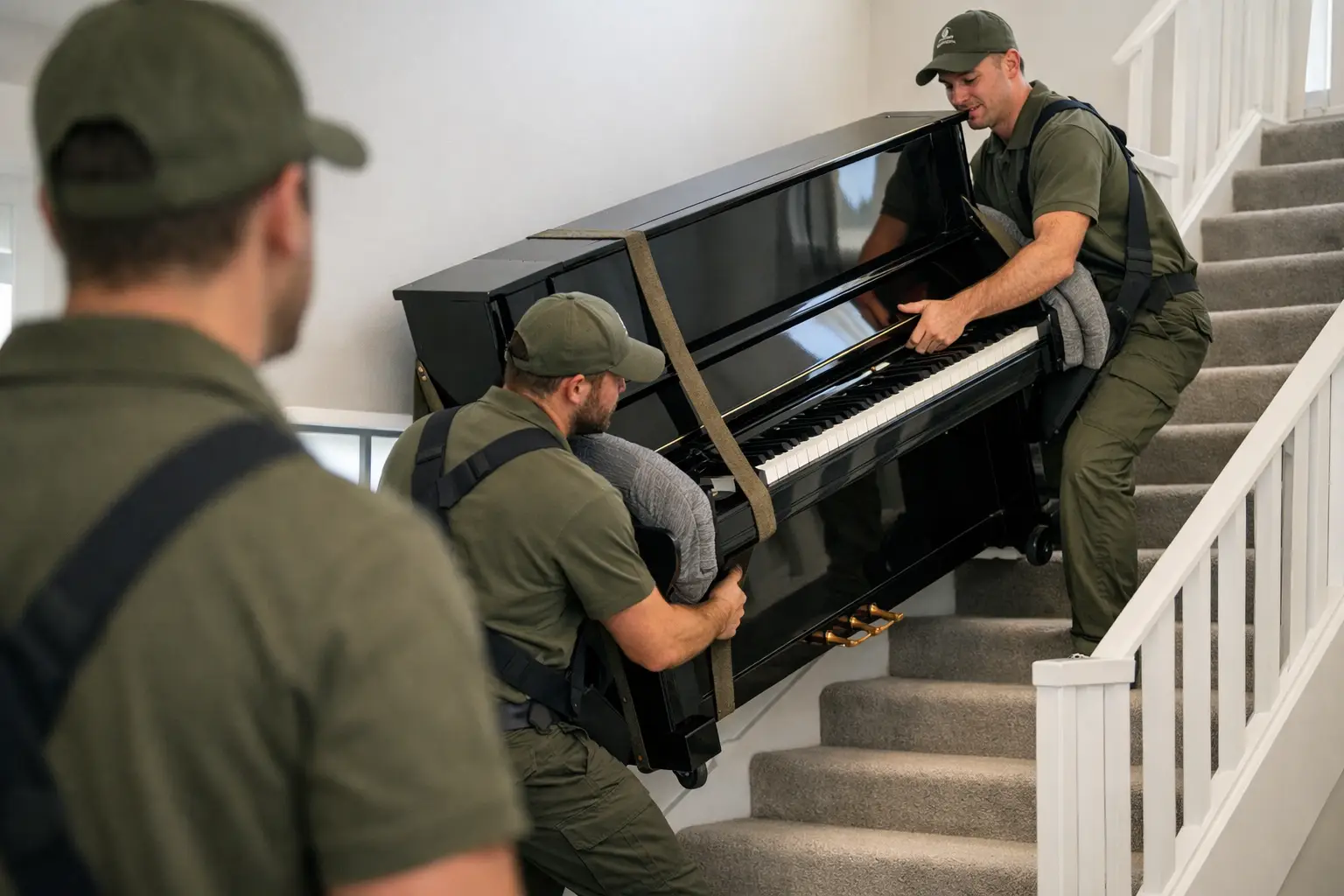
A piano is not just another heavy piece of furniture. Its weight is uneven, its finish marks easily, and a small mistake on a staircase can damage the instrument, the home, or the people carrying it. If you are researching how to move a piano upstairs, the honest answer is that planning matters far more than brute strength. For many Auckland homes, professional piano movers are the sensible option.
A standard upright can weigh anywhere from roughly 180 kg to more than 300 kg. Baby grands and larger grand pianos introduce another set of risks because their legs, lid and pedal assembly are not designed to carry the instrument during a move. Add a tight stairwell, a turn at a landing, polished timber floors or plasterboard walls, and an ordinary furniture move becomes specialist work.
Start with the staircase, not the piano
Before anyone lifts a corner, assess the complete route from where the piano sits now to its final room. Measure the piano at its widest, deepest and tallest points, then measure every doorway, hallway, stair width, ceiling height and landing. Do not assume that a piano which fitted through the front door can make it around an upstairs turn.
The key issue is usually the landing. A straight staircase may offer enough width, but a 90-degree turn can require more clearance than expected to rotate an upright safely. Low ceilings can also prevent the team from tilting the piano into the position needed for a turn. A handrail, light fitting or tight door jamb can be the detail that stops the move.
Check the structure as well. Most sound residential stairs can handle the weight when it is spread across several people and moved carefully, but visibly loose treads, damaged balustrades or slippery surfaces need attention first. Never use a handrail as an anchor point or expect it to support the piano’s weight.
A proper pre-move assessment should cover:
- the piano’s make, model and approximate weight
- stair width, number of turns and landing dimensions
- access at both ends of the route
- floor surfaces, wall finishes and obstacles
- whether a balcony, external stairway or mechanical lift is a safer alternative
Photos and accurate measurements allow a professional mover to determine whether the job needs a standard piano team, additional labour, stair-climbing equipment or another access method. This avoids the costly situation where a crew arrives, starts the job, then finds the piano cannot physically make the turn.
Why moving a piano upstairs is different
Pianos are awkward because their centre of gravity is not where most people expect it to be. On an upright piano, much of the weight sits in the cast-iron frame and internal mechanism. It can shift suddenly when the instrument is tipped. On a grand piano, the body is extremely heavy while the legs are relatively vulnerable, which is why the piano must be prepared and carried using the right support points.
The wheels on an upright piano are also misleading. They are generally designed for minor repositioning across a level floor, not for rolling across carpet, thresholds, outdoor paths or stairs. Pushing it on its castors can crack timber flooring, damage the wheels and put the piano out of control.
There is also the instrument itself. A dropped piano may suffer cabinet damage, broken pedals, damaged action parts or a cracked soundboard. Even when no damage is immediately visible, a hard knock or excessive vibration can affect its regulation and tuning. A piano may need tuning after any move, but tuning is not a fix for physical damage.
Prepare the route before moving day
Clear the route completely. Remove rugs that can bunch underfoot, move small furniture, take pictures off narrow walls and secure doors so they cannot swing into the carrying path. If the stairwell is tight, protect corners, door frames and painted walls with padded covers or purpose-made protection.
Floor protection needs to suit the surface. Timber, tile and polished concrete can be scratched by grit trapped under a moving blanket or trolley wheel. Carpet can snag or compress under heavy loads. Clean the route first, then use appropriate protective materials that will not slide underfoot.
The piano should be closed, locked where possible, and wrapped in thick moving pads secured with straps or tape that does not contact the finish. The lid of a grand piano should be secured, and removable components should only be handled by people who understand the correct disassembly and reassembly process. Do not tape directly onto a polished piano surface. Adhesive can lift finish or leave residue.
Humidity and weather matter too. Rain on external steps creates a slip risk, while a wet blanket against a timber cabinet is an avoidable problem. If the route includes an outdoor section, have a weather plan rather than forcing the move through unsafe conditions.
How to move a piano upstairs safely
For a straightforward, accessible upright, trained movers will normally use a coordinated team, heavy-duty piano straps, protective padding and a controlled lift. The piano is kept upright unless its design and the route require another approved carrying position. The team moves one step at a time, with clear communication and a nominated person directing the lift.
The people on the lower side of the stairs carry more of the load, which makes positioning, grip and strength critical. Nobody should be underneath the piano, and there must be a safe way to stop and rest without relying on a stair edge, a rail or an unstable piece of furniture. If anyone loses their grip, the instruction is to get clear, not to try to save the piano at the cost of an injury.
At turns and landings, the piano may need to be carefully repositioned. This is where rushed work causes chipped walls, crushed fingers and damage to the cabinet. A professional team will stop, reassess the angle and adjust protection as needed. They do not force an instrument through a space simply because it is close to fitting.
For grand pianos, the job usually involves specialist preparation, including securing the lid and carefully removing and protecting components where required. The piano body is supported on a purpose-built skid board or equivalent professional equipment. This is not a job for a few friends, a ute and optimistic lifting.
Do not rely on the wrong equipment
A household hand trolley, furniture sliders and cheap ratchet straps are not a piano-moving system. A trolley may be useful on level ground when used correctly, but it does not make stairs safe. Likewise, a rope tied around the piano creates pressure points and gives people a poor grip. It can also cause serious injury if it slips under load.
Purpose-built equipment makes a real difference, but it only works in trained hands. Well-maintained piano dollies, load-rated straps, padding, stair protection and clean, suitable transport vehicles are part of professional standards. The other part is judgement: knowing when equipment is appropriate and when the access route calls for more people or a different method.
This is also why the cheapest quote is not always value. A low price can quickly become expensive if untrained labour damages a staircase, drops the piano or takes twice as long because the crew arrived without the right gear. Direct, accountable movers assess the actual job rather than selling a generic service and leaving the risk with the customer.
When to call professional piano movers
Professional help is strongly recommended if the piano is going up any internal stairs, the route has tight turns, the instrument is a grand or antique model, or the home has delicate finishes. It is also the right call when the piano has sentimental or high financial value, even if access looks easy.
Auckland Moving Guys can assess piano access as part of a planned move and provide the trained labour, protective equipment and fit-for-purpose transport needed for heavy specialty items. The goal is not merely to get the piano upstairs. It is to complete the job without gambling with your home, your instrument or anyone’s safety.
Once the piano is in its upstairs position, leave it in place for a short period before arranging tuning. Temperature and humidity changes can affect it after transport, and moving it again to correct a poor room choice only creates another unnecessary risk. Choose the final position carefully, keep it away from direct sun and heat sources, and give the instrument the settled, stable home it deserves.



0 Comments