
Can Movers Move a Safe? Yes – With Care
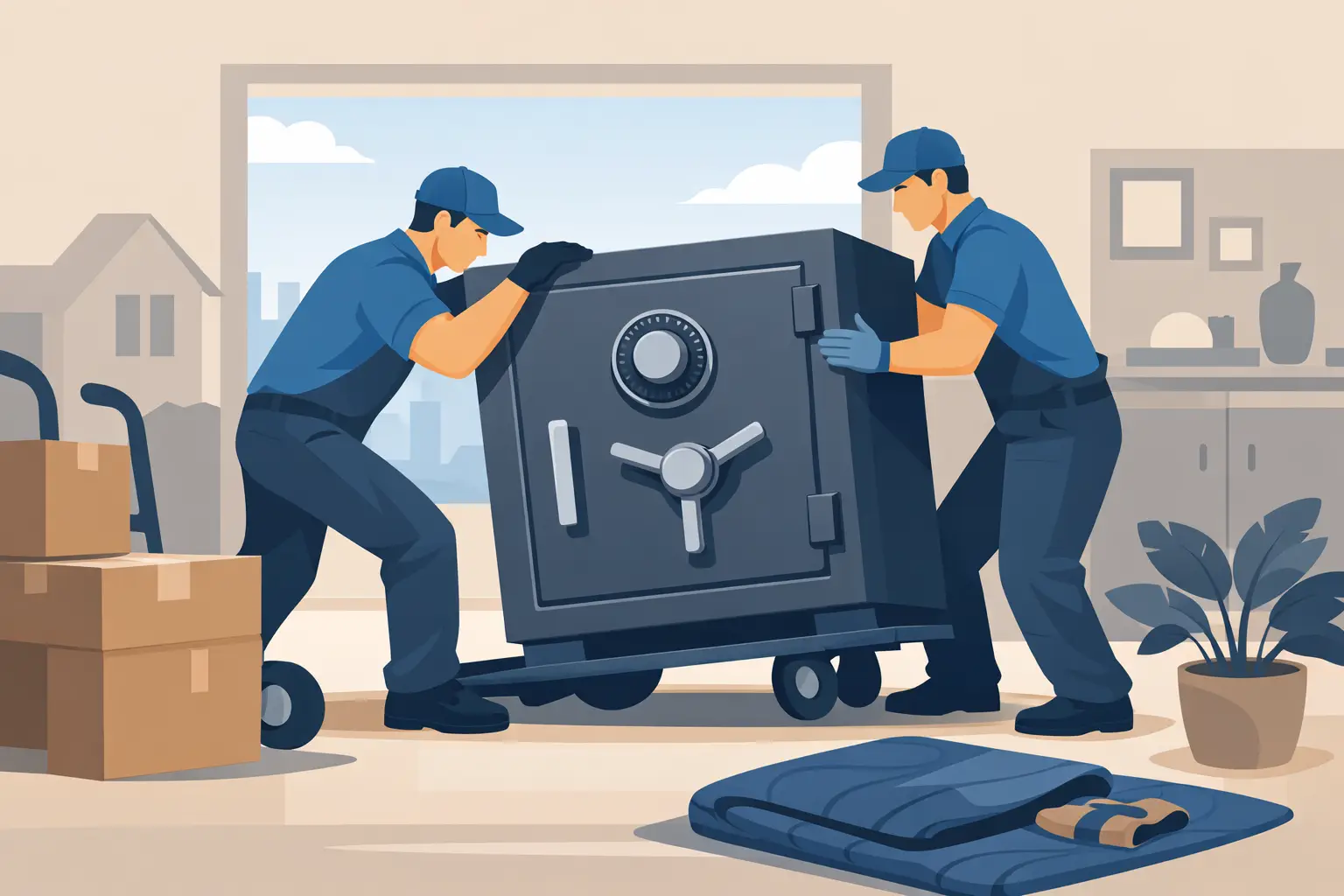
A safe looks simple until someone tries to move it. Then the real issues show up fast – weight, awkward balance, tight doorways, weak flooring, stairs, and the very real chance of injury or property damage if the job is handled badly. So, can movers move a safe? Yes, but not every mover should.
That distinction matters. A small document safe in a ground-floor study is one thing. A 600 kg gun safe, a commercial safe in an office, or a heavy unit being taken down stairs is a different job entirely. The answer is not just whether movers can do it. It is whether the crew has the training, equipment, truck setup, and judgement to do it without damaging your home, your workplace, or the safe itself.
Can movers move a safe in every situation?
Not automatically. Professional movers can move many safes, but the job depends on the safe’s size, weight, location, access, and how it has been installed.
Some safes are straightforward because they are compact, freestanding, and positioned near a clear exit. Others are bolted into concrete, tucked into tight cupboards, installed upstairs, or placed on timber floors that need careful load management. There are also safes with delicate locking mechanisms or finish surfaces that can be damaged by rough handling.
A proper moving company will not guess. They will ask questions first, and for more complex moves they may ask for photos, measurements, and an approximate weight. That is not red tape. It is how experienced movers avoid turning a heavy-item move into an expensive problem.
What professional movers assess before moving a safe
The first issue is weight. Many customers underestimate this badly. Safes are often far heavier than they appear because of reinforced steel, concrete composite filling, fireproofing layers, and internal locking components. A safe that looks manageable can still be well beyond what a general furniture crew should try to muscle around by hand.
The second issue is dimensions and balance. A safe is not just heavy. It is dense, top-heavy in some cases, and difficult to grip. Unlike a sofa or dining table, there are limited handholds and very little forgiveness if it shifts suddenly.
The third issue is access. Movers need to know whether there are steps, narrow halls, sharp turns, lifts, sloped driveways, or soft ground between the safe and the truck. Even a short move across a property can require planning if the path is uneven or the surface cannot support moving gear properly.
Flooring also matters more than people realise. Heavy safes can mark timber, crack tiles, dent vinyl, and overload weak sections of older floors if the load is not spread correctly. A trained crew will think about surface protection and weight distribution before the first lift starts.
The equipment that makes safe moving possible
If a mover plans to shift a safe with little more than a couple of straps and brute force, that is your warning sign. Heavy-item moving should be equipment-led, not ego-led.
Depending on the job, safe moving may involve appliance trolleys, heavy-duty dollies, skates, lifting straps, stair-climbing equipment, tail-lift trucks, load-rated ramps, padding, floor protection, and solid tie-down systems inside the truck. Just as important is a truck that is suitable for heavy freight and loaded by people who understand balance and restraint.
This is where the gap shows between trained operators and casual labour. A safe is not just another box to wedge in beside household furniture. It needs proper restraint during transport so it cannot shift under braking or cornering. If the truck setup is wrong, the risk does not end once the safe leaves the building.
Why safe moving is not a general labour job
A safe move can go wrong in a few seconds. Fingers get crushed, backs get injured, walls get smashed, stair nosings break, and polished floors cop damage that costs more to repair than the move itself. That is why heavy-item work should be handled by movers who do this kind of job regularly, not by whoever is cheapest on the day.
There is also the accountability issue. Some booking platforms and lead-generation services sell moving jobs without actually doing the work themselves. That can leave customers with a crew of unknown experience turning up to handle one of the heaviest items in the property. When something goes wrong, responsibility can get fuzzy very quickly.
A direct moving company with trained in-house staff is in a much stronger position to assess the job properly and stand behind the work. For customers moving safes in Auckland or along the wider North Island corridor, that level of accountability is worth far more than a vague low quote.
When movers may say no
A professional refusal is often a good sign. It means the mover understands the risk.
There are situations where a safe move may need extra machinery, extra crew, a specialist heavy-item plan, or in some cases a different contractor entirely. That might apply where a safe is extremely heavy, built into cabinetry, bolted down in a way that requires removal first, or located in a place with dangerous access constraints.
Upper-level removals can be especially tricky. A safe on the second storey is not automatically impossible, but stairs, landings, floor load limits, and turning room all need to be considered. The same applies to commercial premises with tight lift access, after-hours building rules, or loading dock restrictions.
If a mover says yes to everything without asking sensible questions, that is not confidence. That is carelessness.
How to prepare if you need movers to move a safe
The easiest way to keep a safe move efficient is to provide accurate information early. If you know the brand, model, weight, and dimensions, pass that on. If you do not, send clear photos from the front and side, plus any labels or serial plates that mention weight or specifications.
You should also let the mover know whether the safe is empty, whether it is bolted down, and what the path looks like from the room to the truck. Mention stairs, tight corners, gates, wet surfaces, gravel, or anything else that could affect access. If the move is for a business, note any site restrictions, booking requirements, or limited access times.
Before moving day, empty the safe unless the mover has specifically told you otherwise. Remove cash, documents, jewellery, ammunition, or other contents. For security reasons, many customers also prefer not to discuss what the safe normally holds, and that is reasonable. The important thing is that the unit is empty and ready.
If possible, clear the route so the crew can work without delay. Every extra obstacle adds time, and with hourly moving costs, wasted time is wasted money.
Can movers move a safe without damage?
Often, yes. But the honest answer is that damage prevention comes down to method, not luck.
Good movers protect floors, wrap contact points, control the load at all times, and avoid rushed decisions. They do not drag a safe across timber and hope for the best. They do not force it through a space that is obviously too tight. They use the right gear, enough hands, and a clear plan from pickup to placement.
There is still a difference between low-risk and high-risk jobs. A small safe moved across level ground is generally much simpler than a heavy fire-rated safe on stairs. That is why quotes can vary. The complexity is not just about kilometres travelled. It is about how much control the crew can maintain throughout the move.
The real question is who is moving it
When people ask, can movers move a safe, they are usually also asking whether it can be done safely, efficiently, and without drama. The answer depends less on the safe and more on the mover.
An experienced moving company will treat a safe as a specialised item, not a side job. That means asking the right questions, bringing the right equipment, using a suitable truck, and putting trained staff on the job. It also means being upfront if the move needs a more complex solution.
That is the standard serious movers work to, and it is the standard customers should expect. If your safe matters, and your property matters, choose a crew that acts like both do.

1 Comment
Moving Insurance Explained Clearly - Auckland Moving Guys Ltd · June 10, 2026 at 1:42 am
[…] treatment for high-value or fragile items. Artwork, antiques, marble tops, electronics, pianos, safes, and sentimental items may need to be declared in advance. If they are not listed properly, a […]