
Can Movers Handle Staircases Without Damage?
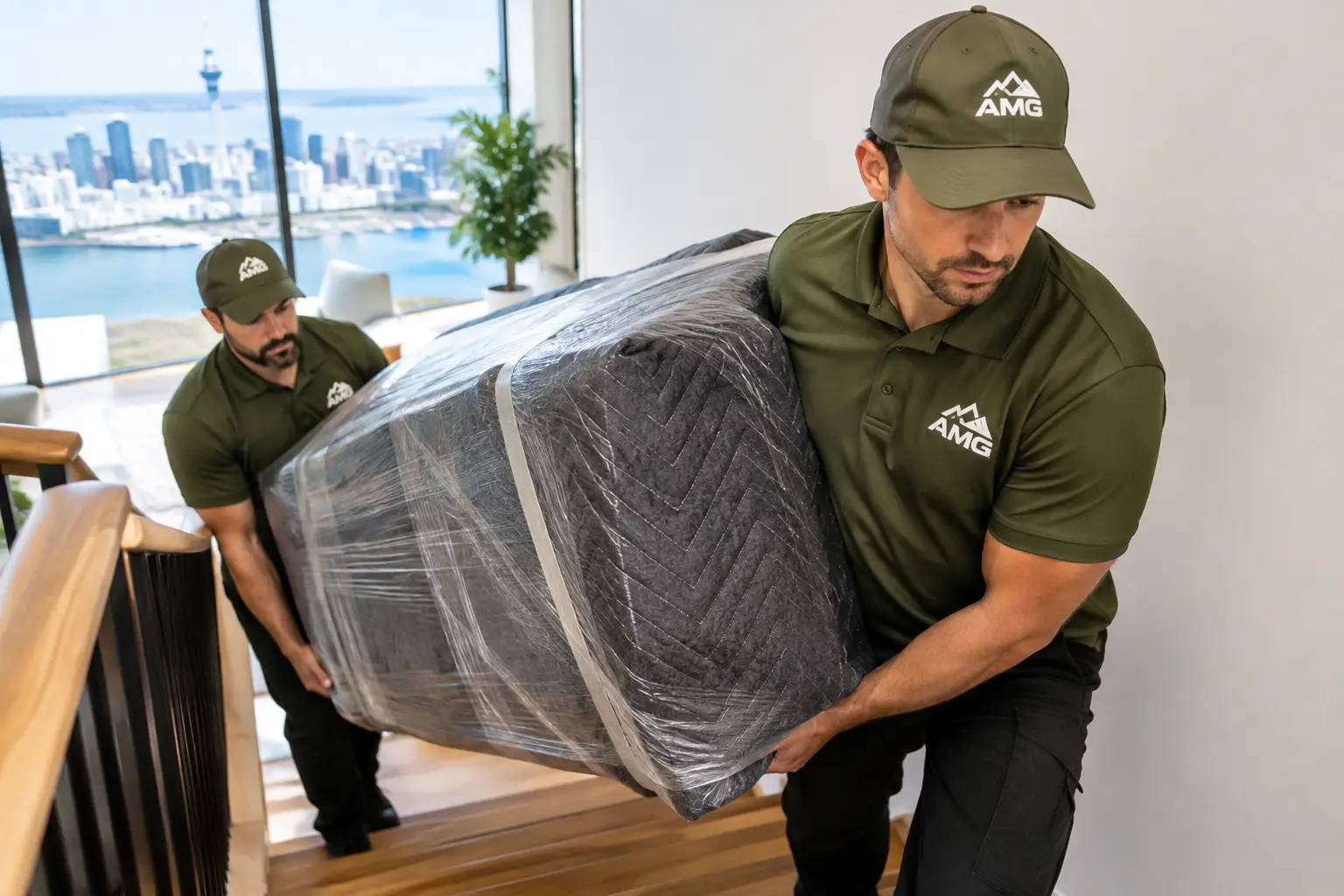
A staircase can turn a straightforward move into the part everyone worries about. The answer to “can movers handle staircases” is yes, provided the job is assessed properly and handled by trained movers with the right equipment. Stairs are routine work for an experienced crew, but they are never something to rush, guess at, or leave to untrained labour.
A sofa that fits comfortably through a front door may still be too wide for a tight turn at the landing. A heavy timber sideboard can be manageable on level ground yet become a genuine safety risk on steep internal stairs. The difference is planning, technique and a crew that takes responsibility for the result.
Can Movers Handle Staircases Safely?
Professional movers handle staircases by treating them as an access problem first and a lifting job second. Before carrying anything, the crew needs to understand the width of the stairwell, the ceiling height, the turning space at each landing, the condition of handrails, and where the truck can park.
This assessment determines whether an item can travel upright, needs to be carried on its side, requires partial disassembly, or is better moved another way. Sometimes the safest option is to use a balcony, external access point or furniture hoist. The right answer depends on the property and the item, not on wishful thinking.
A good moving crew also protects the route before the first item comes off the truck. That can include furniture blankets, shrink wrap, floor protection and careful placement around corners and walls. Protection is not just about avoiding scuffs. It gives the team a controlled route so they can focus on the load and their footing.
Why Stairs Need More Than Extra Muscle
Anyone can carry a box upstairs. Moving a refrigerator, king mattress, solid-wood cabinet or large sofa through a narrow stairwell is different work altogether. It requires coordination, clear communication and people who know how to control the item without putting themselves, the customer’s home or the furniture at risk.
The heaviest person on the crew is not automatically the most useful person on stairs. Experienced movers use positioning, grip, balance and the correct carrying angle. They know when to stop, reset their hold and change the plan. Trying to force a large item through a tight turn is how walls get marked, rails get damaged and furniture gets dropped.
There is also a time-cost issue. On an hourly move, poor preparation quickly becomes expensive. A crew that repeatedly tests an item at the same corner, or has to return to the truck for basic protective materials, burns time without progressing the move. Purpose-built furniture trucks and properly equipped movers help keep work moving at a sensible pace.
The Staircase Details Movers Need Before Moving Day
The more accurate information you provide before booking, the more reliable the plan will be. Photos and measurements are especially useful for narrow townhouses, apartment buildings and homes with split-level layouts.
Tell the moving company about stairs at both addresses, not only the pickup property. Include the number of flights, whether there are turns or landings, and whether there is internal or external access. Let them know if lifts are available, if building management requires a booking, or if the truck has limited parking nearby.
For large furniture, measure the item as well as the route. The relevant measurements are the furniture’s height, width and depth, plus the narrowest point of the staircase, the landing dimensions and any low ceiling or light fitting near the turn. A quick measurement can prevent an unpleasant surprise on moving day.
It also helps to identify anything particularly heavy or awkward in advance. Pianos, safes, spa pools, marble tables, statues and large commercial equipment should never be treated as ordinary furniture. These items may need additional movers, specialist handling gear, a tailored access plan or a separate quote.
What Happens When Furniture Will Not Fit?
Professional movers do not force an item through a staircase simply because it has to leave the house. If the access does not work, the crew should explain the options clearly.
In many cases, furniture can be dismantled safely. Bed frames, modular lounges, desks, dining tables and some wardrobes are often easier to move in sections. Doors can occasionally be removed where appropriate, and removable legs or handles may create the clearance needed. This should be done carefully, with hardware kept together and the condition of the furniture considered first.
Other items cannot be dismantled without damage or are simply too large for the stairwell. A large one-piece sofa, oversized stone tabletop or bulky cabinet may require external lifting equipment. This is not a failure by the movers. It is a practical response to the limits of the building.
Customers should be cautious of anyone who promises every item will fit without asking questions or viewing photos. Access is not an area for broad promises. Honest advice before the move is far better than a rushed decision when the item is halfway up the stairs.
Common Staircase Risks and How Good Movers Reduce Them
Stair moves carry predictable risks: slips, awkward turns, damaged walls, marked flooring, strained backs and furniture that catches on rails or ceilings. The aim is not to pretend these risks do not exist. It is to reduce them through controlled work.
A trained crew keeps the route clear, communicates continuously and maintains a manageable pace. One mover should not start stepping down until the other is ready. Loads should be kept under control rather than allowed to swing around corners. If visibility is limited, the team needs a clear caller and agreed commands.
Handrails deserve particular care. They can be loose, decorative or unable to take pressure from a heavy item. Experienced movers avoid using a rail as a support point unless it has been assessed and there is no safer alternative. The same applies to plasterboard walls, glass balustrades and freshly painted surfaces.
Weather matters too. External stairs become more hazardous in rain, while wet shoes can bring water and grit into a home. A professional crew adjusts its approach rather than treating poor conditions as business as usual.
Apartment Stairs, Narrow Homes and Office Buildings
Staircase access is often more complicated in newer apartments and compact Auckland townhouses. Shared corridors may be narrow, lifts may be booked for limited periods, and building rules can restrict where a truck can stop. A move can be well organised inside the apartment but still lose time if access downstairs has not been confirmed.
Office moves have their own challenges. Stairwells may be fire exits that cannot be blocked, and heavy filing cabinets, boardroom tables or IT equipment need planned handling. Commercial relocations should be scheduled around building requirements, staff safety and the need to minimise downtime.
Auckland Moving Guys Ltd. approaches these jobs with trained in-house movers, suitable furniture trucks and direct accountability from quote through to completion. That matters when the access is difficult. There is no benefit in booking through a middleman who has never inspected the job and will not be there when a staircase problem needs a practical solution.
How to Prepare Your Home for a Stair Move
Customers can make the job safer and faster by clearing loose items from stairs and landings before the crew arrives. Remove rugs, shoes, pot plants, baskets, pictures and anything that could create a trip hazard or narrow the route.
If possible, secure pets away from the access path and keep children clear while large items are being carried. Check that outdoor paths, gates and entryways are unlocked and free of rubbish or garden obstacles. For apartment moves, confirm lift bookings and parking arrangements ahead of time.
Do not attempt to move large items onto the stairs yourself to “save time”. Leaving furniture in a stable room gives the crew a safer starting point and avoids an uncontrolled situation before the movers have assessed the item.
The Right Question Is Whether They Can Handle Your Stairs
Most staircases can be managed efficiently by capable movers, but every property has different limits. The relevant question is not simply whether movers can carry furniture upstairs or downstairs. It is whether the company has asked the right access questions, supplied the right crew and equipment, and given you straight advice about anything that may need a different solution.
Before moving day, take clear photos, measure the tight spots and be upfront about heavy or valuable pieces. That small amount of preparation gives the moving crew the information needed to protect your home, your belongings and your budget when the stairs are involved.


0 Comments