
Clinic Move Example: A Safe Relocation Plan
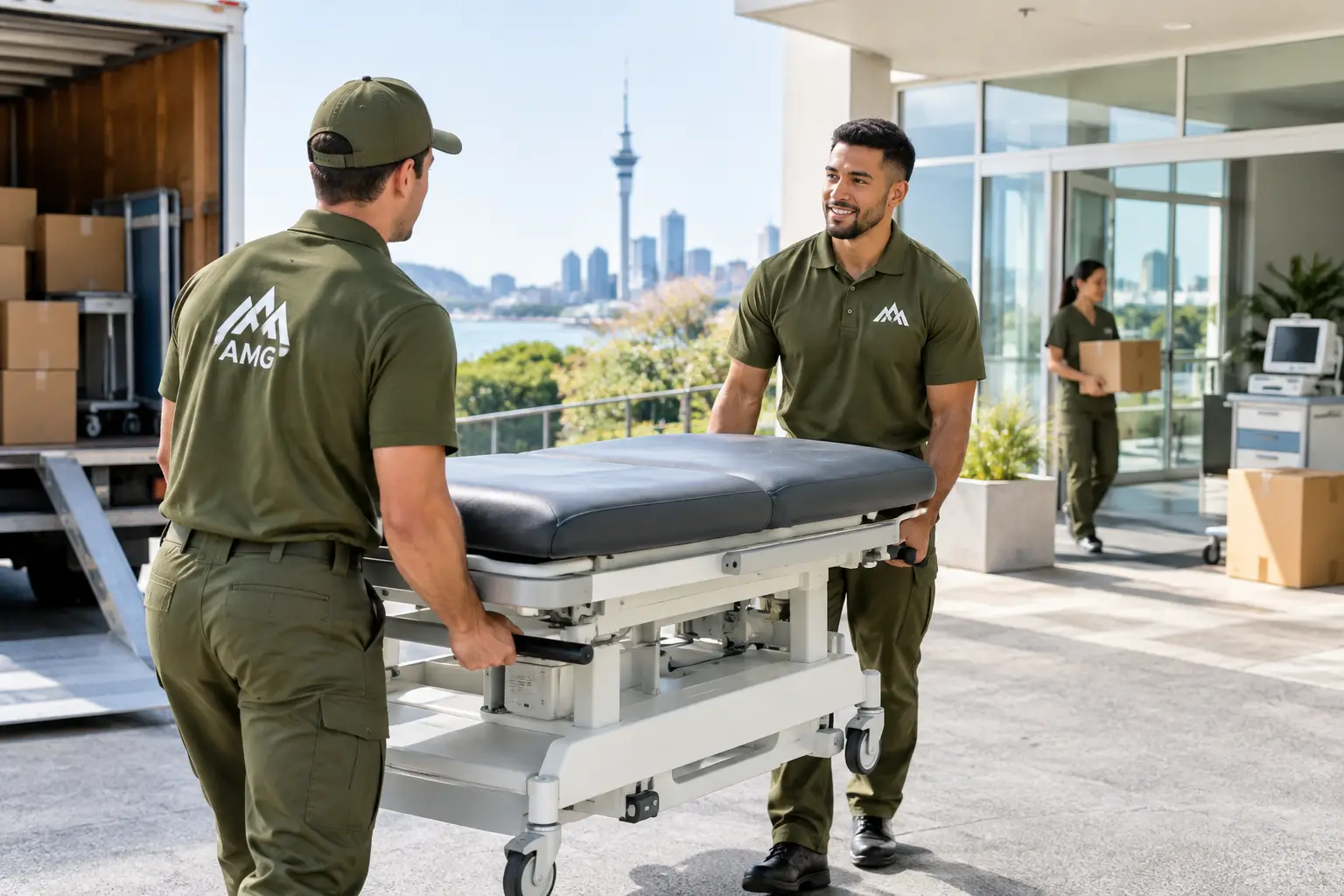
A clinic relocation is not an ordinary commercial move with a few extra boxes. A useful clinic move example shows why: patients may still need to be seen, confidential files must remain controlled, treatment rooms contain delicate equipment, and one blocked lift or poorly packed trolley can put the reopening date at risk.
The job is won before the truck arrives. It takes a proper site assessment, an agreed sequence of work, trained movers and equipment suited to medical and allied-health furniture. The objective is simple: protect the practice’s assets, keep downtime tight and hand the new premises back in a usable order.
Clinic move example: relocating a six-room practice
Consider a six-treatment-room physiotherapy clinic moving from a first-floor tenancy in central Auckland to a ground-floor premises 12 kilometres away. The practice has a reception desk, waiting-room furniture, filing cabinets, desktop computers, printers, treatment tables, exercise equipment, stock cupboards, a fridge, and boxed patient records. It closes at 4 pm on Friday and aims to see its first patients at 8 am Monday.
At first glance, it looks manageable. In reality, the move has several pressure points. The old building has a shared loading zone with a strict collection window. The lift is too small for some treatment tables when assembled. The new site has a narrow driveway, polished floors and other contractors working on signage and final cleaning. The clinic cannot afford to have its reception desk, records or core treatment rooms misplaced in a general pile of cartons.
This is where experienced planning saves time. The move team walks both sites before moving day, checks access, measures large items and confirms truck parking. They identify which items need partial dismantling, where protective floor coverings are required, and whether a second vehicle or a shuttle run makes more sense than trying to force everything into one oversized load.
There is no benefit in booking a cheap crew that turns up, looks for a park and starts making decisions on the clock. For a clinic, those delays quickly cost more than a proper plan.
Start with a room-by-room relocation sequence
The clinic manager and move coordinator agree on a sequence rather than treating the premises as one large load. Reception is packed first because it contains loose technology, stationery and sensitive files. Treatment rooms follow, with each room numbered and its contents labelled to match a designated room at the new site.
Treatment tables are assessed individually. Some can travel upright with padded protection; others need legs removed, wrapped and secured. Exercise bikes, reformers or heavy rehabilitation machines may require specialist handling, lifting straps, dollies and enough trained staff to control the weight safely. Heavy equipment should never be manhandled by people who are guessing at its balance point.
The clinic’s IT provider disconnects computers, phones and network hardware before the movers arrive. Movers can then pack monitors, towers and peripherals into suitable cartons or crates, clearly labelled for reception or the relevant consultation room. This division of responsibility matters. A professional moving crew protects and transports the equipment; a qualified IT provider manages disconnection, data systems and reconnection.
Patient records are treated differently from ordinary office paperwork. The clinic nominates one staff member to oversee them, seals them in numbered cartons and keeps a simple chain-of-custody list. Depending on the practice’s policy and the volume involved, records may travel in a separate locked vehicle or be loaded last and unloaded first. The key is accountability. Confidential material should not be left unattended in a corridor, loading dock or shared truck bay.
Protect the premises as well as the contents
A clinic move can cause damage at either end if the crew arrives without the right protection. Polished timber, vinyl flooring, glass doors, lift interiors and freshly painted walls are all vulnerable when furniture is moved in a hurry.
Before loading starts, the movers place floor protection through high-traffic areas and use furniture pads, shrink wrap and corner protection where required. Reception counters and cabinetry are wrapped properly, not covered with a loose blanket that slips halfway down a stairwell. Drawers are emptied or secured, glass is protected, and loose shelves are removed and labelled.
The truck matters as well. A clean, purpose-built furniture truck with tie rails, blankets, straps and appropriate loading equipment gives the crew control. A vehicle that is unsuitable, dirty or short on protective materials creates risk before it leaves the kerb.
For this example, the first load contains reception furniture, records, IT cartons and two treatment rooms. At the new premises, these items are unloaded directly into their allocated spaces. The second load contains remaining treatment tables, waiting-room furniture, stock cupboards and exercise equipment. This staging avoids filling every room with mixed cartons and leaving clinic staff to sort it out after the movers have gone.
Plan for downtime, not just travel time
The truck journey might take less than an hour, but travel time is rarely the main issue. Packing, building access, lifts, loading-zone restrictions, careful handling and placement at the new clinic determine the real duration and cost.
In this clinic move example, the practice reduces downtime by preparing in advance. Staff clear personal items, dispose of unwanted paperwork securely, use remaining consumables where practical and label every carton before the crew arrives. The landlord confirms loading access, and the new-site cleaner finishes before the unloading window begins. The clinic also keeps a small essentials kit separate: keys, alarm details, mobile chargers, cleaning supplies, toilet paper, basic tools, kettle supplies and the first day’s reception materials.
Not every task should be completed on moving day. Artwork, wall-mounted televisions, specialist medical devices, plumbing-connected equipment and network installation may need separate trades. Trying to combine every trade into a tight loading window can create avoidable delays. It depends on the equipment and the clinic’s reopening requirements, but a staged handover is often safer than rushing.
What can go wrong with a poorly managed clinic move?
The common problems are predictable. Furniture is packed without a room plan, so the new clinic becomes a warehouse. Treatment tables are loaded without adequate protection and arrive marked or damaged. Records are mixed with general cartons. A crew underestimates the weight of a safe or rehabilitation machine. The truck cannot park close enough, meaning repeated long carries that add time and fatigue.
Another issue is unclear responsibility. Some booking platforms take a deposit and pass the work to whoever is available. If the crew is inexperienced, late or poorly equipped, the clinic is left dealing with the consequences while the intermediary has little practical control over the job.
Direct accountability is worth paying for. A moving company that employs and trains its own staff, operates suitable trucks and assesses the job beforehand is in a position to manage the work properly. That is especially relevant where patient privacy, specialist equipment and a fixed reopening date are involved.
The handover that makes Monday morning easier
Once unloading is complete, the move is not finished simply because the truck is empty. The clinic manager walks through each room with the lead mover. They check that numbered items are in the correct locations, look for visible damage, confirm that all cartons are accounted for and make sure accessways remain clear.
Furniture is positioned where the clinic needs it, within reason, rather than dropped in the nearest available space. Reception is set up first, followed by the rooms needed for the first appointments. Empty cartons and packing materials are collected where this has been arranged, leaving staff with a workable clinic rather than another day of heavy lifting.
For practices with a short closure window, this final placement is a practical cost control measure. Every desk, treatment table or filing cabinet put in the right room by the trained crew is one less item staff need to shift later.
Auckland Moving Guys approaches commercial relocations this way: with the access, protection, labour and timing considered before the first item moves. If your clinic has unusual equipment, a difficult site or a firm reopening date, raise it early. A clear plan gives the move team the chance to bring the right people and gear, and gives your practice the best chance of opening its doors on time.


0 Comments