
Are Moving Trucks Insured? What Your Move Covers
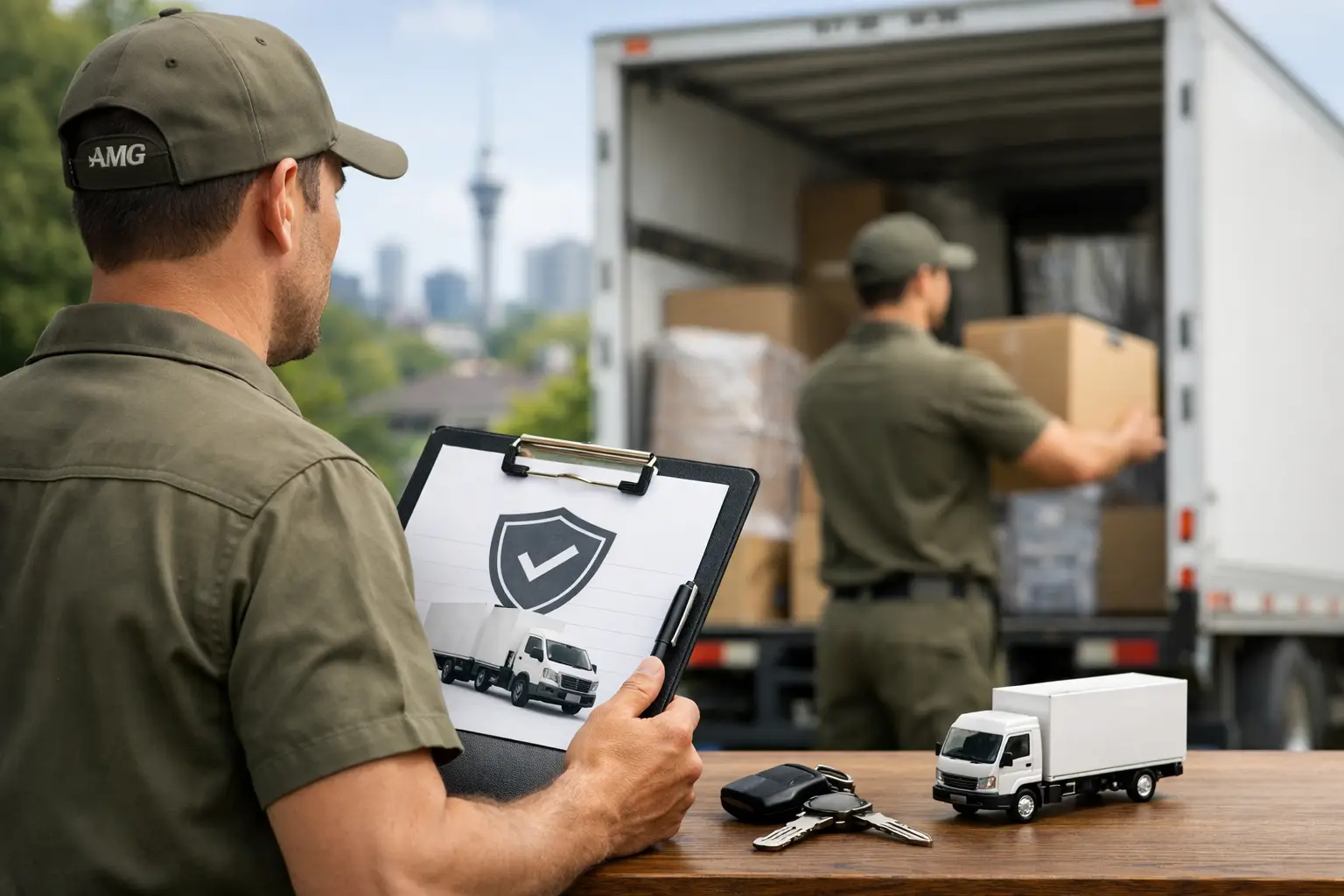
A clean, purpose-built furniture truck is a good sign. It is not, by itself, an answer to the question: are moving trucks insured? The truck may be insured for road use, but that does not automatically mean every sofa, television, antique, or office workstation inside it is covered for every type of loss.
That distinction catches people out. When you are comparing movers, ask what protection applies to the vehicle, the crew’s work, and your goods in transit. A professional operator should be able to explain this clearly before moving day, rather than pointing to vague wording after something has gone wrong.
Are moving trucks insured for your belongings?
Usually, the truck itself will carry motor vehicle insurance. That protects the operator against risks associated with driving, such as an accident, theft of the vehicle, or damage to another vehicle or property. It is essential cover for a legitimate moving business, but it is not the same thing as comprehensive insurance for the customer’s belongings.
Furniture can be damaged without a road accident. A dining table may be scratched during loading, a glass cabinet can crack if it was not packed correctly, or a washing machine may be affected by poor preparation. The vehicle policy is not necessarily designed to respond to those situations.
For customers, the more relevant questions are whether the mover has goods-in-transit cover, carrier liability cover, public liability insurance, or a stated liability arrangement in its terms and conditions. Each responds to different circumstances, and each has limits, exclusions and conditions.
A straight answer matters here: no mover should suggest that insurance is unlimited or that every item is automatically covered at full replacement value. That is not how most commercial policies work.
The cover that can apply during a move
A properly run moving company manages risk through trained staff, suitable equipment, secure loading methods and appropriate insurance. Insurance is the financial back-up, not a substitute for doing the job properly in the first place.
Truck and motor vehicle cover
This concerns the moving truck and its operation on the road. A reputable mover should use maintained, fit-for-purpose vehicles that are properly licensed and suitable for carrying furniture. Vehicle insurance may respond if the truck is involved in an accident, but the policy wording determines whether and how customer goods are treated.
Do not assume that a large, modern-looking truck means your belongings have blanket protection. Ask specifically about the goods being carried.
Goods in transit or transit insurance
Goods-in-transit cover is the category most people have in mind when they ask about moving insurance. Depending on the policy and the service agreement, it may cover certain loss of or damage to customer goods while they are being transported.
The detail matters. Cover can have a maximum value per item, a total limit for the load, an excess, and exclusions for fragile, high-value, improperly packed or owner-packed goods. Some policies may be based on depreciated value rather than the cost of buying a brand-new replacement.
This is why you should declare unusually valuable items before accepting a quote. Jewellery, cash, important documents, art, collectibles and sentimental heirlooms may need specialist arrangements or should travel with you. A standard furniture move is not the right place to make assumptions about irreplaceable property.
Carrier liability
Carrier liability is not always insurance in the everyday sense. It can be a legal or contractual responsibility a transport company has when it is at fault. The amount recoverable can be limited by the terms of carriage, even where the mover accepts responsibility.
For example, a company may have a stated cap per item or per consignment. That may be reasonable for a standard move, but it may be inadequate for a designer sofa, premium electronics or a commercial fit-out. Read the terms before the truck arrives, not while the crew is waiting at the door.
Public liability insurance
Public liability generally relates to accidental injury to people or damage to third-party property. It may be relevant if a mover damages a wall, floor, lift, driveway or neighbouring property while carrying out the job.
It does not automatically replace goods-in-transit cover. Both forms of protection can be important, particularly in apartment buildings, offices and properties with narrow access, polished floors or strict body corporate requirements.
What insurance commonly does not cover
Even strong cover has boundaries. Exclusions are not necessarily a sign of a poor mover. They are common in commercial insurance and should be disclosed plainly.
Owner-packed cartons are a frequent example. If the crew cannot see how items were wrapped inside a box, it can be difficult to establish whether damage occurred during transport or because the contents were inadequately packed. Professional packing reduces this uncertainty because the same trained team can pack, load and transport the goods using appropriate materials.
Other common problem areas include pre-existing damage, items that are not structurally sound, fragile goods packed without suitable protection, mechanical or electrical faults not caused by physical damage, and goods left unattended outside a secure premises. Flat-pack furniture, particleboard items and heavily worn furniture can also be vulnerable during a move, even with careful handling.
Pianos, spa pools, safes, marble tables and statues deserve separate attention. These are not ordinary lifting jobs. Their weight, shape and centre of gravity call for experienced staff, the right moving gear and a clear plan for stairs, tight turns, accessways and loading. If a mover treats a specialty item like another box, the insurance question is already secondary to the bigger problem: poor operational planning.
Questions worth asking before you book
You do not need to become an insurance expert. You do need clear answers in writing. Ask the mover what cover applies to customer goods, whether there is a per-item or total claim limit, what excess applies, and whether owner-packed boxes are included.
Also ask how high-value items, fragile pieces and specialty goods are handled. If you are moving between Auckland, Whangarei, Hamilton or elsewhere in the North Island, confirm that the same arrangements apply for the full journey, including any overnight storage, transfer between vehicles or temporary holding period.
A professional mover will also want information from you. Be upfront about access restrictions, stairs, lifts, parking, oversized furniture and anything unusually heavy. This is not paperwork for its own sake. It allows the company to send the correct truck, crew size, equipment and packing materials, which reduces both damage risk and time-based moving costs.
Your own contents insurance may still matter
Check your home and contents policy before the move. Some policies include limited cover while belongings are being relocated, while others require you to arrange an extension or separate transit cover. Conditions may differ depending on whether you use professional movers, pack the goods yourself, place items into storage or move across a longer distance.
Your insurer may also set different rules for laptops, cameras, art, jewellery and other valuables. If the replacement value of your belongings is well above a mover’s liability limit, your own policy may be the protection that closes the gap.
Keep a sensible record of valuable items before moving day. A few dated photos, model numbers and proof of purchase can make a major difference if you ever need to raise a claim. Photograph existing scratches and dents as well. It protects you, and it prevents avoidable arguments about damage that was already there.
Insurance is not a reason to accept careless moving
The best moving result is the one where no claim is needed. That starts with a trained in-house team, clean furniture trucks, protective blankets, mattress covers, secure tie-down methods and enough time to load properly. Cheap operators often save money by cutting the very things that protect your belongings: skilled labour, preparation, equipment and accountability.
Be wary of booking platforms or lead-generation businesses that take the enquiry but pass the work to an unknown subcontractor. If there is a problem, responsibility can become blurred quickly. You should know who is arriving, who employs the movers, who owns or operates the truck, and who will deal with you if a concern arises.
At Auckland Moving Guys, the focus is on preventing damage through disciplined moving work, not making inflated promises about what an insurance policy might do afterwards. That means planning the move properly, using crews who understand furniture handling, and being clear about the terms that apply.
Before you book, request the mover’s written terms and ask the uncomfortable questions. A company that takes responsibility for its work will give you straight answers, and that is a far better starting point than finding out what was covered after your furniture is already on the road.


0 Comments