
12 Best Office Moving Tips That Cut Downtime
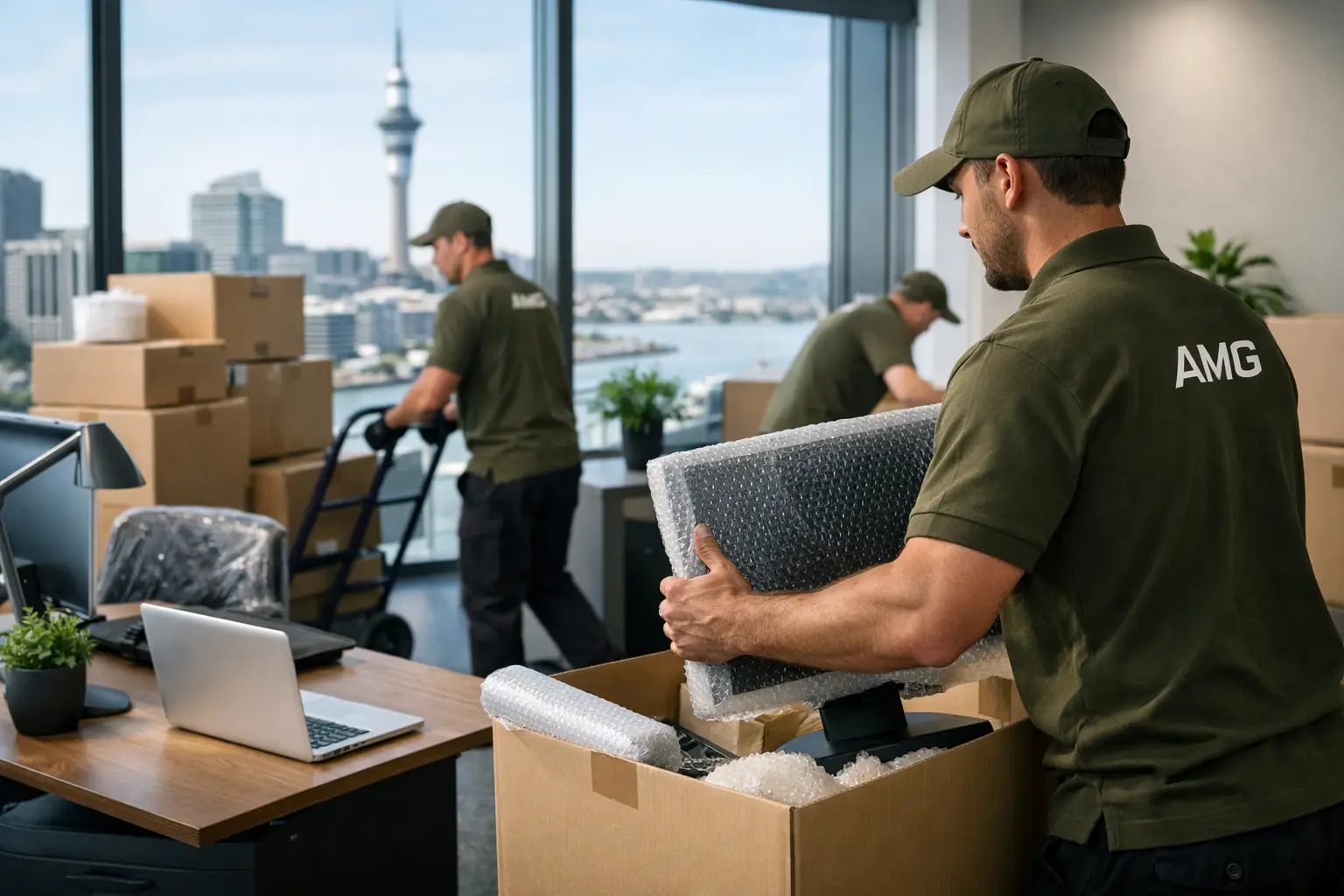
An office move can burn through more money in lost working hours than it does in truck time. The best office moving tips are therefore not about finding more cardboard boxes. They are about making clear decisions early, protecting the equipment your team relies on, and giving trained movers a site that is ready to load and unload without delay.
For a small Auckland business, that may mean moving over a weekend and being operational Monday morning. For a larger workplace, it may mean staged moves by department. The right approach depends on your lease dates, building access and the amount of IT infrastructure involved. What does not change is the need for one accountable plan.
Best Office Moving Tips for a Controlled Relocation
1. Appoint one decision-maker
Office moves go off track when every staff member has a different answer about what is staying, what is going and where it belongs. Put one internal move coordinator in charge. That person should approve the floor plan, confirm access times, communicate with the building managers and be available to make decisions on moving day.
This does not mean they need to lift a desk or supervise every box. It means movers, IT contractors and staff have a single point of contact when a cabinet is not on the plan or a lift booking changes. That saves time, and time is usually where commercial moving costs grow.
2. Start with a proper inventory, not a rough estimate
Walk through the existing office and record every major item: workstations, chairs, filing cabinets, boardroom tables, shelving, printers, monitors, kitchen appliances and archived files. Include awkward items such as safes, oversized tables or fragile display pieces.
A useful inventory identifies what will be moved, sold, stored, recycled or disposed of. It also shows the moving company what truck space, labour and equipment are actually required. A quote based on “about 20 desks” can change quickly if there are also compactus units, a heavy photocopier and a full storeroom of files.
3. Measure both offices before booking the move
Measure large furniture and compare it with doorways, corridors, lift interiors, stairwells and loading areas at both ends. Check ceiling heights if tall shelving is involved. A boardroom table may fit comfortably in your current space but still need its legs removed to leave the building.
This is also the point to identify difficult access. Narrow CBD loading zones, shared service lifts, limited parking and long carries from the truck to the suite all affect the labour required. Good movers can handle challenging sites, but they need accurate information rather than surprises at 7 am.
4. Lock in building access and parking in writing
Most commercial buildings have rules around moving hours, lift protection, loading docks, contractor sign-in and vehicle parking. Some require a certificate of insurance or advance booking for service lifts. Others restrict noisy work or vehicle access during business hours.
Confirm these requirements with both property managers well ahead of time. If a truck cannot park close to the entrance, or the booked lift is unavailable, your team may be paying for avoidable waiting time. Clear access is one of the simplest ways to keep a move efficient.
5. Move IT separately from general furniture planning
Computers, servers, phones, network equipment and cable infrastructure deserve their own schedule. Your IT provider should back up critical data, photograph existing connections, label every cable and decide who is responsible for disconnecting and reconnecting each item.
Do not assume a desk mover should unplug a server rack or reconfigure your network. Professional movers can transport labelled equipment carefully, but IT disconnection and commissioning should sit with qualified IT personnel. Coordinate both teams so devices are not packed before data has been backed up or delivered before the new site is ready.
6. Label by destination, not by employee name alone
A label saying “Sarah” is not enough when desks are changing locations. Use a simple destination system that identifies the new floor, zone or room, workstation number and owner where relevant. Put matching labels on desks, chairs, pedestals, monitor arms and boxes.
Colour coding works well for larger offices, provided the plan is shared with the moving crew. A clear floor plan at the new site turns unloading into placement, rather than a pile of furniture that staff must sort through later.
7. Pack files and small items into strong, manageable cartons
Office files are deceptively heavy. Do not overfill cartons or use worn boxes collected from random sources. Use clean, sturdy moving cartons, keep weight manageable and seal every box properly. Files should be labelled by department and destination, especially where confidential records are involved.
Staff should clear personal belongings, desk drawers and loose kitchen items before moving day. Loose items slow down loading and increase the risk of breakage. For sensitive documents, nominate authorised staff to pack, transport or receive them rather than leaving custody unclear.
8. Decide what furniture is worth moving
Relocation is a good time to be realistic. Moving broken chairs, surplus cupboards and old stationery simply transfers clutter to the new office and adds cost. Remove unwanted items before the moving crew arrives, whether they are being donated, recycled, sold or collected as rubbish.
There is a trade-off here. Replacing furniture can cost more than relocating it, particularly with quality workstations or custom joinery. But when old furniture is oversized, damaged or no longer suited to the new layout, paying to move it twice makes little sense.
9. Use the right equipment for heavy and specialised items
A safe, commercial printer, marble table or large cabinet is not a job for a few staff members and a borrowed trolley. These items can damage flooring, walls and people when handled without the right equipment and training.
Tell the moving company about specialty items during quoting. Proper planning may require extra movers, protective materials, stair equipment or a particular truck setup. The cheapest quote is not good value if it is based on incomplete information or a crew that arrives unprepared.
10. Protect the premises as well as the furniture
Office relocations involve more than wrapping desks. Lift interiors, door frames, carpets, glass partitions and reception areas need protection too. A professional crew should use clean furniture pads, appropriate trolleys and protective materials suited to the site.
Ask how the company trains its movers, what vehicles it uses and whether the crew is employed and accountable for the work. A booking platform or lead-generation website may pass your job to whoever is available. For a commercial move, you want to know who is arriving, who is responsible and whether they have the equipment to do the job properly.
11. Plan the new office before the first truck arrives
Have the new layout finalised and circulate it before moving day. Mark workstations, meeting rooms, storage areas and shared spaces. Confirm where power, data, printers and kitchen equipment will sit, because moving a heavy workstation after it has been unloaded wastes labour and risks damaging finished surfaces.
If the office is being fitted out at the same time, coordinate the sequence. Painters, electricians, cleaners, IT technicians and movers can all need access to the same spaces. In many cases, it is better to complete dusty trade work and final cleaning before furniture arrives.
12. Keep an essentials kit out of the truck
Set aside the items needed to open the new office: keys, access cards, lift bookings, floor plans, chargers, basic tools, first-aid supplies, cleaning products, tea and coffee supplies, and the contact details for building management and IT support. Keep them with the move coordinator, not packed into a carton.
Also nominate a staff member to do a final check of the old premises. They should inspect cupboards, kitchen areas, storage rooms, under desks and the loading zone before the crew leaves. A final walkthrough at the new office confirms that major items are in the correct rooms and any concerns are recorded straight away.
A Better Move Is Usually a Better Plan
The best office relocations are rarely the ones with the most people involved. They are the ones where the scope is honest, access is confirmed, furniture is labelled clearly and trained movers have the right truck and equipment for the work. Auckland Moving Guys Ltd. approaches commercial moves with that practical discipline, because protecting your assets and getting your people back to work should never be left to guesswork.
Before you set a moving date, walk the route from every old workstation to its new position. The gaps you notice then are far cheaper to fix than the ones discovered with a loaded truck waiting outside.


0 Comments