
Full Service Movers vs DIY: Which Pays Off?
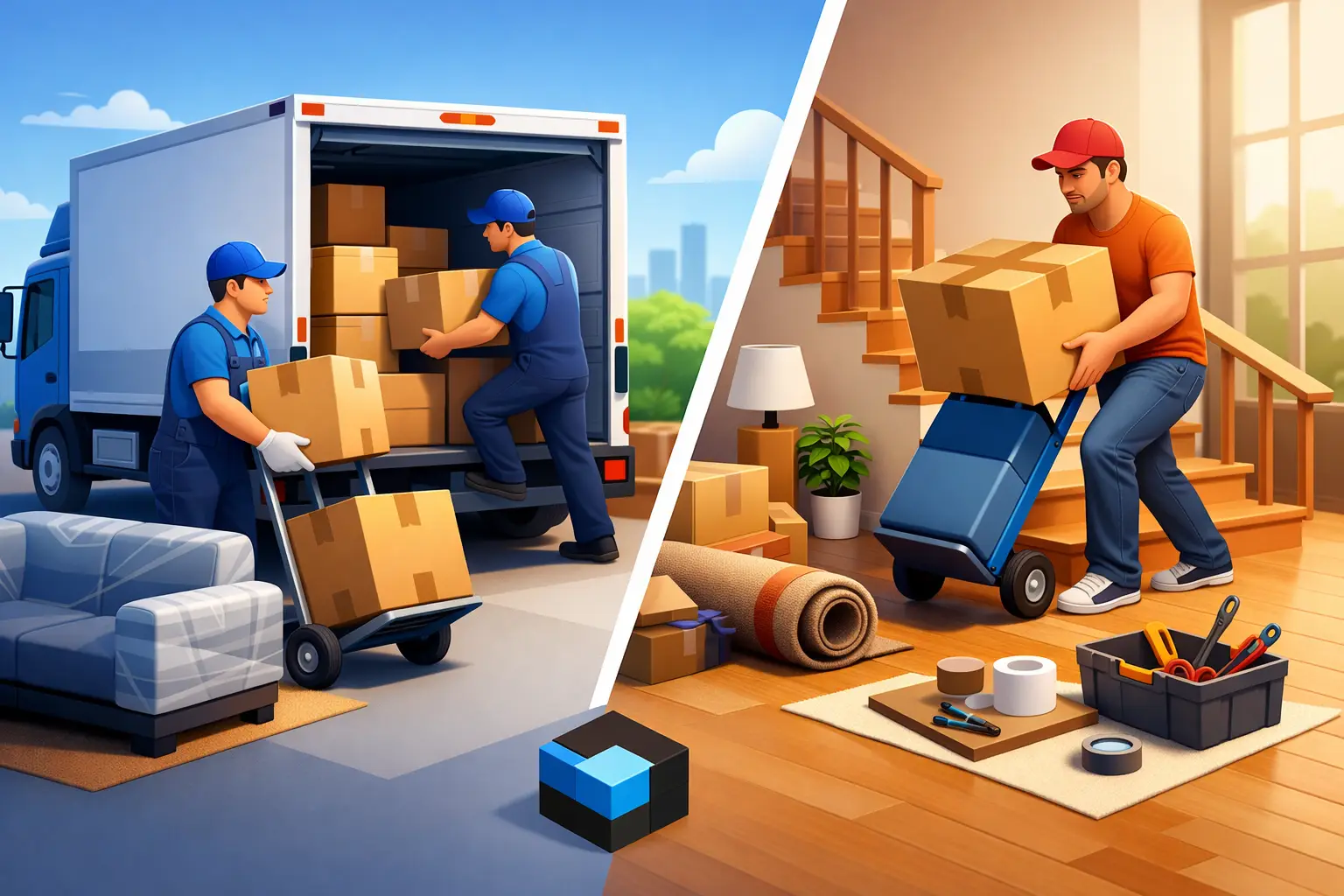
Moving day usually looks cheaper on paper than it does in real life. That is why the full service movers vs DIY question matters so much. The price gap can shrink fast once you factor in truck hire, fuel, packing materials, time off work, damaged furniture, awkward access, and the simple fact that heavy lifting done badly costs more later.
For some moves, doing it yourself is perfectly reasonable. For others, it is a false economy. The right choice depends on what you are moving, how far it is going, how much risk you can tolerate, and whether you want the move handled by trained people with the proper truck and equipment or by friends, guesswork and a borrowed trolley.
Full service movers vs DIY: what is the real difference?
DIY moving means you arrange the whole job yourself. You source boxes, pack the contents, hire a truck or trailer, load it, drive it, unload it, and return equipment on time. If something goes wrong, there is nowhere to shift responsibility.
Full service movers take on the operational side of the move. Depending on the job, that can include planning access, protecting furniture, loading techniques, transport, unloading, placement, and packing support. On more complex moves, it can also mean the safe handling of pianos, safes, spa pools, marble tables or oversized office furniture that should not be left to enthusiasm alone.
That difference is not just convenience. It is accountability. A professional moving company performs the work with trained staff, a purpose-built furniture truck, proper tie-down points, blankets, trolleys and loading systems designed for transport. That is very different from hiring a random truck and hoping everything stays upright between Auckland and Hamilton.
When DIY makes sense
A DIY move can be a sensible option if the job is small, local and low risk. If you are moving out of a studio flat, have minimal furniture, easy ground-floor access and a flexible schedule, you may save money by handling it yourself. The same goes for short-distance moves where you are transporting mostly boxes, small appliances and items that are not especially fragile or valuable.
It can also suit people who have enough capable help lined up and understand what they are taking on. That last part matters. A lot of DIY moves rely on mates who are keen until it starts raining, the sofa does not fit through the doorway, or the hired truck has to be back by 4 pm.
DIY tends to work best when the move is simple enough that delays, scratches or minor inefficiencies will not create serious cost or stress. If your timeline is loose and your furniture is basic, the margin for error is wider.
Where DIY often goes wrong
The biggest mistake people make is comparing only the truck hire fee against a mover’s quote. That is not the full cost. DIY moving comes with hidden expenses and hidden risks, and both usually show up on the day.
Packing materials add up quickly. Fuel and excess kilometres can bite. So can insurance excess on a hired vehicle, especially if you are not used to driving something larger than a family car. Then there is the cost of time. If you spend a full weekend packing, collecting keys, picking up the truck, loading badly, making extra trips and returning equipment late, the savings may not look so impressive.
There is also the damage issue. Furniture gets chipped in stairwells. Fridges get laid down the wrong way. Tables are not wrapped properly and end up gouged. Mattresses get dirty in unsuitable vehicles. These are not rare events. They are the normal result of poor preparation and inexperience.
Physical injury is another part of the equation. Lifting a washing machine, manoeuvring a king bed down a tight hallway or shifting a safe onto a trailer is not a test of effort. It is a test of technique, equipment and control. Back injuries and crushed fingers are expensive ways to save a few hundred dollars.
When full service movers are worth it
If the move has complexity, value or time pressure, professional movers usually make financial sense as well as practical sense. Families moving a full household, businesses relocating offices, and anyone moving between cities should think carefully before going DIY.
A full household move is not just about muscle. It is about sequencing, loading order, furniture protection, access management and time control. Experienced movers know how to load a truck properly so the whole job is completed in fewer trips, with less handling and less chance of damage.
Commercial moves are even less forgiving. Office downtime costs money. Staff should not be risking injury moving desks and filing cabinets. IT equipment, boardroom furniture and archived files need to arrive in order, not as a pile of disconnected problems.
Then there are the specialty items. Pianos, spa pools, statues, safes and stone furniture need the right gear and people who know how the weight behaves. One bad angle on a stair landing can damage the item, the walls, the floor and the person lifting it. This is where trained operators earn their keep.
Cost is not just the invoice
People often ask one simple question: which is cheaper? The honest answer is that it depends on what you count.
DIY can be cheaper in direct cash terms on a very small move. But once the move gets larger, tighter, longer or more delicate, full service movers often deliver better value for money because they control the things that make moving expensive – wasted time, repeated handling, poor truck use, breakage and avoidable delays.
Hourly moving costs are especially sensitive to efficiency. An organised crew with a clean, fit-for-purpose truck can often complete a move faster than a DIY team of willing amateurs. If the movers know how to protect furniture, stack correctly and manage access, the job keeps moving. That efficiency matters more than many people realise.
The wrong truck is another classic problem. Hiring a vehicle that is too small creates repeat trips and extra lifting. Hiring one that is unsuitable for furniture means poor restraint, dirty interiors or difficult loading height. Purpose-built furniture trucks exist for a reason.
Full service movers vs DIY for Auckland and North Island moves
A short move across the suburb is one thing. A longer move across the North Island corridor is another. Distance increases the cost of mistakes.
On an intercity move, loading quality matters more because the furniture is in transit longer and road conditions do the rest. Poorly packed or badly restrained items shift, rub, tip and break. What survived a ten-minute drive can be damaged by a few hours on the road.
Timing also gets tighter. Collection windows, settlement timing, lift access, building rules and traffic all need proper coordination. A professional crew plans for those variables. A DIY move often discovers them halfway through the day.
That is one reason many customers looking for reliability choose direct operators rather than booking platforms or middlemen. If the company quoting the move is the company performing it, there is a clearer line of responsibility. Auckland Moving Guys Ltd. has built its reputation around that principle because accountability matters when your home or business contents are on the truck.
How to decide without guessing
The best way to choose is to look at the move as an operational job, not just a line item on a budget. Start with volume. How much furniture is involved, and how many stairs, tight corners, lifts or long carry distances are there? Then consider value. Are you moving flat-pack basics, or pieces you would be furious to see scratched or dropped?
Next, look at the timeline. Can the move spill over into another day, or does it need to happen on schedule? A delayed office move or a house move with settlement pressure has a real cost.
Finally, be honest about capability. Not willingness – capability. Do you have the right people, the right truck, the right equipment and the right handling knowledge? If the answer is no on any of those, a professional service is usually the safer decision.
There is also a middle ground. Some people pack their own cartons but hire movers for loading, transport and heavy items. Others need labour-only help to load a container or rearrange furniture during renovations. That approach can keep costs sensible while still protecting the most difficult parts of the job.
The smartest move is not always the cheapest quote or the toughest DIY effort. It is the option that gets your belongings from A to B with the least risk, the least wasted time and the clearest responsibility if something goes wrong. If your move is small and simple, DIY may do the job. If it is valuable, complex, time-sensitive or physically demanding, pay for experience and proper equipment. You only move once on that day – do it in a way that protects your furniture, your schedule and your back.


0 Comments