
Intercity Movers North Island: Who to Trust

Auckland to Hamilton looks easy on a map. Auckland to Whangarei can sound like a simple day run. But anyone who has actually moved a household or business between cities knows the job is won or lost long before the truck leaves the driveway. If you are comparing intercity movers North Island customers rely on, the real question is not who can give you a quick price. It is who is properly set up to protect your furniture, manage the loading well, and stay accountable if something goes wrong.
That matters more on an intercity move than a short local shift. Your belongings spend longer in transit, the truck has more time on the road, and poor packing or rushed loading gets exposed fast. A scratched table, a blown-out sofa corner, a broken chair leg, or wasted hours at each end of the move often comes down to one thing – the wrong operator.
What separates good intercity movers North Island from the rest
Plenty of businesses advertise moving services. Not all of them are actual moving companies in the practical sense. Some are lead generators. Some subcontract jobs out. Some have a truck and a mobile but no real systems, no training standard, and no clear responsibility once your goods are in transit.
For a local move, that is risky enough. For an intercity relocation, it is a bigger problem. You want to know exactly who is turning up, what truck they are using, how your furniture will be wrapped and secured, and whether the people handling the job have experience beyond basic lifting.
A proper intercity moving team should be able to explain how they load for distance, not just for convenience. Heavy items need to be positioned for stability. Fragile pieces need the right protection. Access at both properties has to be considered in advance. If the booking process feels vague, the moving day usually gets worse, not better.
Why cheap quotes can cost more
Price matters. No sensible person wants to overpay for a move. But with intercity transport, the cheapest quote is often the one with the most gaps hidden inside it.
Sometimes the low price comes from using unsuitable vehicles, minimal wrapping, undertrained labour, or unrealistic timing. Sometimes it comes from quoting without asking the right questions about stairs, driveway access, large furniture, commercial equipment, or difficult items like pianos, safes, marble tables, and spa pools. Then the extras start appearing, or the job drags out because the crew was never equipped to do it efficiently.
That is where customers get burned. The hourly cost may look lower, but the move takes longer. The truck may be cheaper, but it is not fit for furniture transport. The operator may promise the world, but the crew arriving at the door has never handled a proper intercity load.
Value for money in moving is about controlled time, proper handling, and fewer mistakes. A disciplined crew with the right truck and equipment will often save money compared with a bargain operator who fumbles through the job.
The truck matters more than most people realise
Customers often focus on labour first. Fair enough. But truck quality has a direct effect on whether your furniture arrives in good order.
A purpose-built furniture truck is not just about size. It is about cleanliness, tie rails, load security, internal setup, and suitability for packed household goods or office contents. Dirty trucks, badly maintained trucks, or general freight vehicles used as improvised furniture movers create avoidable risk.
On an intercity route, load restraint is not optional. Your belongings need to be packed and secured to handle distance, braking, corners, and road vibration. If the truck setup is poor, the crew has to work around those limitations, and your furniture pays the price.
That is why experienced movers are particular about equipment. The wrong truck can turn a straightforward relocation into a damage claim.
Questions worth asking before you book
When people compare intercity movers North Island-wide, they often ask how much first and everything else second. A better approach is to test the operator properly.
Ask whether the team is in-house or subcontracted. Ask what kind of truck will be used. Ask how furniture is wrapped and secured. Ask whether they handle specialty items regularly or only “if needed”. Ask what information they need from you to quote accurately. If a company can answer clearly and directly, that is usually a good sign.
You should also pay attention to what they ask you. Serious movers want details because details affect planning. They will ask about access, inventory, large or fragile pieces, settlement timing, and whether packing is required. They are not trying to make the job complicated. They are trying to stop problems before moving day.
Residential and commercial moves need different planning
A household move and an office move are both intercity jobs, but they are not the same task.
Residential customers usually care most about careful handling, timing, and reducing stress around family routines, settlement dates, and access windows. Furniture, whiteware, packed cartons, and sentimental items all need to be moved without chaos.
Commercial customers often have a different priority. Downtime costs money. Poor sequencing can disrupt staff, delay reopening, and create confusion around workstations, files, stock, or equipment. The mover needs to understand not just transport, but practical relocation order.
That is where experience counts. A team that can shift a home properly may not automatically be set up to manage a business relocation efficiently. Likewise, office movers who treat a family home like freight can create unnecessary damage and stress. The planning has to match the job.
Special items are where real experience shows
Most movers can carry a couch. That does not tell you much. The better test is how they deal with awkward, heavy, high-risk items.
Pianos, spa pools, safes, statues, and stone tables are not side jobs. They require proper assessment, the right gear, enough trained hands, and a realistic plan for loading and unloading. Trying to save money by giving these jobs to underprepared crews often ends badly, either through damage to the item, damage to the property, or injury risk during the move.
If you have specialty pieces, raise them early. A professional operator will not brush the issue aside. They will want dimensions, weights if available, access photos where relevant, and a clear picture of the site conditions. That is not overkill. That is responsible quoting.
Timing, access, and preparation still matter
Even the best moving crew works better when the basics are sorted. Clear access, labelled cartons, parking arranged where possible, and a realistic inventory all help. On intercity jobs, delays at the start can ripple through the whole day.
Good movers will guide you on what to prepare, but they should not need to rescue a completely unplanned move unless you have booked for a full packing and preparation service. There is a balance here. Customers should not be left to figure everything out alone, but they also should not assume the crew can fix poor preparation without time and cost consequences.
This is where direct operators tend to outperform middlemen. A company that actually does the work can tell you what matters because they have seen the same avoidable issues hundreds of times.
Accountability is the real product
Anyone can advertise a moving service. The real product is accountability.
When you book intercity movers, you are not just hiring labour and a truck. You are trusting someone with the contents of your home or business over a meaningful distance. That trust should be backed by training, licensing, fit-for-purpose equipment, and a clear line of responsibility from quote to delivery.
That is why many customers prefer established operators over booking platforms and vague brokers. If the company quoting the move is also the company doing the move, accountability is cleaner. There is less room for finger-pointing, confusion, or excuses.
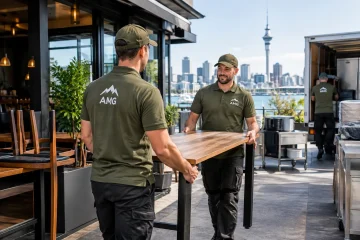
For customers moving between Auckland, Whangarei, Hamilton, and surrounding areas, that practical accountability matters more than sales talk. Auckland Moving Guys Ltd. trades on that standard for a reason. When the job is handled by trained people using the right trucks and proper moving discipline, the move is safer, faster, and usually better value over the full day.
If you are weighing up options, do not just ask who can move your furniture from one city to another. Ask who will still stand behind the job once the doors are shut and the truck is on the road. That is usually where the right decision becomes obvious.



0 Comments