
Marble Table Movers Who Know the Risks
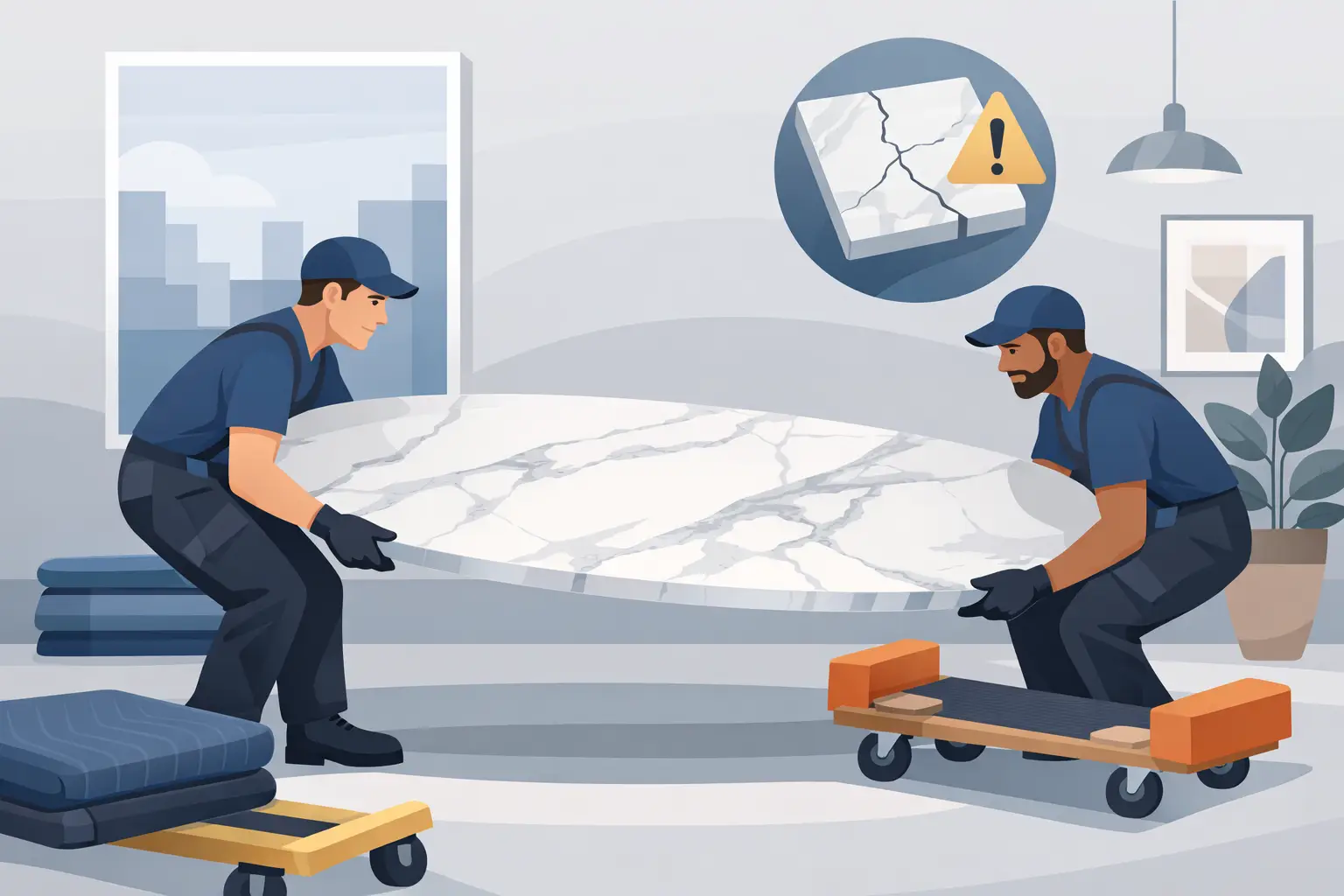
A marble table can look solid and indestructible right up until someone tries to move it the wrong way. That is why marble table movers are not just another part of a furniture move. They are handling one of the easiest high-value items to crack, chip, twist or damage if the job is rushed, under-equipped or left to people who do not understand stone.
Most damage does not happen because a table is dropped from a great height. It happens during the awkward moments – lifting through a doorway, rotating on stairs, loading into a truck with poor tie-off points, or carrying a top while the base shifts underneath. Marble has weight, but it also has brittleness. If the load is not supported properly across its structure, the slab can fail under its own mass.
Why marble table movers need a different approach
A timber dining table and a marble dining table might take up the same floor space, but they are not moved the same way. Timber can flex a little. Marble generally will not. Glass can shatter on impact. Marble can crack from uneven pressure long before that. That difference changes everything about handling, packing, lifting and transport.
The first issue is weight concentration. Marble tables are heavy, but the weight is not always distributed in a way that makes them safe to carry as one piece. Some have thick tops with relatively delicate pedestal bases. Others have metal frames that look strong but create pressure points if the top is not removed and packed separately. In many cases, moving the table assembled is exactly what should not happen.
The second issue is surface vulnerability. People think of marble as hard, and it is, but polished stone marks more easily than many expect. Edges chip. Corners bruise. Veining can contain natural weak lines. A cheap blanket thrown over the top is not a protection plan.
Then there is access. A straightforward move across an open room is one thing. Tight hallways, apartment lifts, uneven paths, wet outdoor surfaces and stairwells make the job far more technical. Good movers assess the route before a single strap goes on the piece.
What can go wrong with marble table moving
The biggest mistakes are usually basic ones. A team underestimates the weight, attempts to carry the table fully assembled, grips the slab from the wrong points, or uses a truck setup better suited to general household furniture than a heavy stone item. That is when damage starts.
One common failure is stress cracking during lifting. This often happens when the slab is picked up from the ends without adequate support through the middle. Another is edge chipping during transitions through doorways or when the table is rested briefly on a hard surface. Bases are also at risk. Stone, metal and custom timber bases can all be damaged if they are used as lifting points rather than disassembled and protected properly.
There is also the people risk. An overloaded or poorly coordinated lift can injure movers or property owners trying to help. Marble does not forgive hesitation on stairs. If the team is not trained, the move can turn expensive very quickly.
How professional marble table movers handle the job
Proper marble table moving starts before lifting. The table is assessed for size, slab thickness, top-to-base connection, access constraints, floor protection needs and vehicle loading requirements. If the top can be safely separated from the base, that is often the right move. Not always, but often.
The slab should be protected with the right padding, edge protection and stable carrying methods that support the weight evenly. The base should be wrapped and secured separately where practical. This is not about making the item look packed. It is about controlling movement and eliminating stress points.
Loading matters just as much as carrying. A fit-for-purpose furniture truck with proper tie rails, clean interior space and room to position the slab securely is part of the job. Heavy stone items should not be squeezed in as an afterthought around loose household goods. If the load shifts in transit, no amount of careful lifting at the start will save it.
Good crews also think about time efficiency, not just caution. That might sound contradictory, but it is not. A trained team works faster because they are decisive. They know when to remove a door, when to use extra hands, and when a short awkward path is actually riskier than a longer cleaner route. That protects the item and controls labour time.
Choosing marble table movers without taking a gamble
If you are comparing movers, the right questions are more useful than the cheapest quote. Ask whether they have handled marble tables or other heavy specialty items before. Ask whether the movers are their own trained staff or subcontracted labour. Ask what truck they are using and how they secure high-risk pieces in transit.
It is also worth asking how they intend to move your specific table. If the answer is vague, that is a warning sign. Experienced movers will usually want to know dimensions, approximate weight, whether the top detaches, what the access looks like and whether there are stairs. They are not being difficult. They are trying to avoid preventable damage.
Be cautious with operators who book jobs they do not actually perform themselves. Accountability gets blurred when the person taking payment is not the one turning up to move the item. With a marble table, that gap matters. If something goes wrong, you want a company that owns the process from quote to delivery.
Auckland Moving Guys Ltd. has built its reputation around exactly that kind of direct accountability, particularly on heavy and high-risk items that should not be left to guesswork.
When labour-only moving works – and when it does not
Some customers already have a truck or only need help shifting a marble table within the same property. Labour-only moving can make sense in those cases, but only if the access is manageable and the handling plan is sound. The saving is not worth much if the team arrives without the right protective materials or the route has not been thought through.
For longer transport, intercity work or multi-item moves, a full-service arrangement is usually safer. Marble tables do not travel well in improvised setups. A trailer, a borrowed van or a truck packed by non-movers can create more risk than the customer realises.
This is one of those situations where spending less upfront can cost more later. Not always, but often enough that it should be considered seriously.
What you can do before the movers arrive
Preparation helps, but there is no need to overhandle the table beforehand. Clear the route, remove floor obstacles, secure pets, and make sure there is space at both ends of the move. If the table has detachable parts and you know the manufacturer instructions, have that information ready. If not, leave it alone rather than forcing fittings or trying to dismantle a stone top without proper support.
It also helps to mention any complications early. That includes narrow stairs, steep driveways, recent floor refinishing, fragile tiles, difficult parking or building access restrictions. These details affect crew size, equipment and timing. Surprises on moving day usually mean either extra risk or extra cost.
Photos can be useful when requesting a quote, especially for unusual bases, large slab tops or awkward access points. A serious mover will use that information to plan, not to oversell.
The real value of trained marble table movers
Anyone can say they move furniture. Marble tables test whether they move it properly. The difference is in training, equipment, discipline and accountability. That is what separates a professional furniture mover from a general labour crew with a trolley and a blanket.
For customers, the practical question is simple. Is the company reducing your risk, or just offering to carry it? With a marble table, that distinction matters more than a polished sales pitch or a bargain rate.
If your table has real value – financially, practically or sentimentally – treat the move as a specialist task. The right team will not make a drama out of it, and they will not pretend it is the same as shifting a flat-pack dining set. They will assess it properly, move it carefully and transport it in a way that respects what is at stake.
That is the standard worth paying for, because once marble is cracked, there is no cheap fix and no second chance at the first lift.



1 Comment
Local Movers vs Removalists for Your Move - Auckland Moving Guys Ltd · August 17, 2026 at 6:40 am
[…] accountability matters most when a move is not straightforward. A piano, safe, marble table, spa pool or large office cabinet is not a job for guesswork. It needs enough trained people, the right […]